



Insights
Best practices and tips on spend management, automated expense tracking and corporate debit cards for Australian SMB and enterprise businesses.
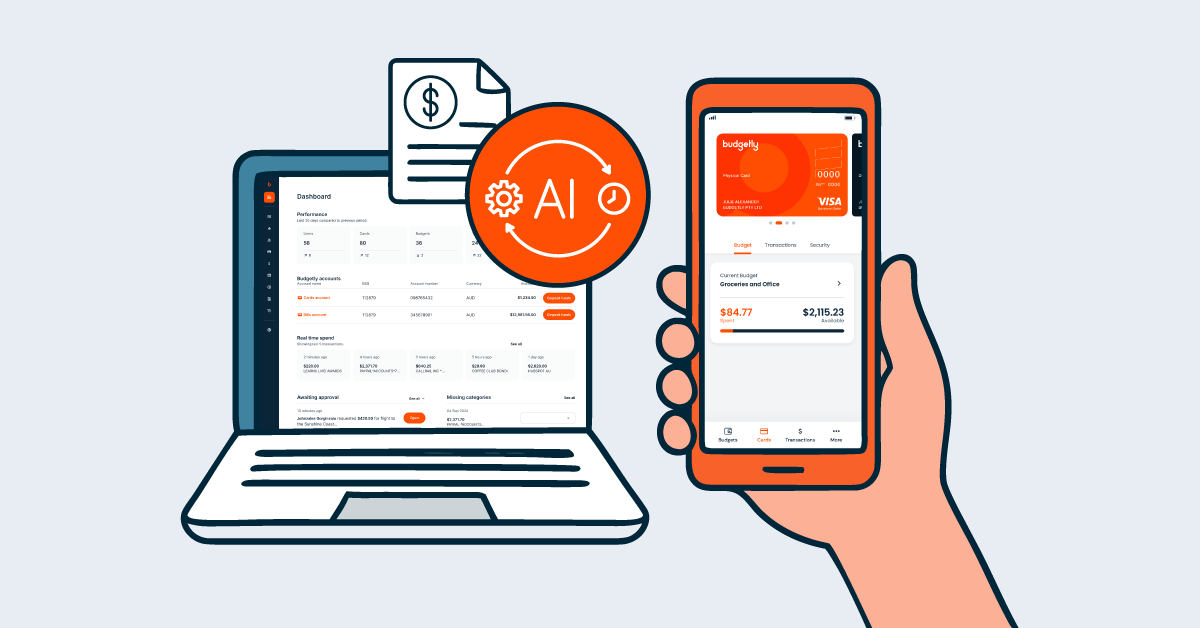
Running an Australian SME means juggling countless financial tasks whilst trying to grow your business. You're manually entering receipts, chasing approvals, and often discovering budget blowouts weeks after they've happened. Meanwhile, your competitors are gaining an edge by automating these time-consuming processes.
Manual accounting processes don't just waste time—they create dangerous blind spots. Late payments harm supplier relationships. Data entry errors compound into costly mistakes. Delayed reporting means you're always reacting to problems rather than preventing them. Without real-time visibility, overspending becomes inevitable.
Accounting automation transforms how Australian businesses manage their finances. By automating routine tasks like expense processing, invoice management, and financial reporting, SMEs can reduce errors, save time, and gain the real-time insights needed for proactive financial control.
Here's what you need to know in under a minute:- Accounting automation uses AI and software to handle financial tasks like data entry, approvals, and reporting automatically
- It eliminates manual processes whilst providing real-time visibility into cash flow and spending
- Australian SMEs save an average of 52 days annually by automating routine accounting tasks
- Modern platforms combine expense management systems, corporate cards, virtual cards, and budget management software in one integrated solution
- Implementation is fastest when businesses automate high-impact processes first
- Success depends on proper setup, clear rules, and ongoing optimisation
- What is accounting automation?
- How accounting automation works
- Key benefits for Australian SMEs
- Core processes you can automate
- Why Australian SMEs need accounting automation
- How Budgetly delivers accounting automation
- Getting started with accounting automation
- Common implementation challenges
- Choosing the right accounting automation software
- The future of accounting automation
- Frequently asked questions
- Taking control of your financial future
What is accounting automation?
Accounting automation uses software, artificial intelligence, and rule-based workflows to handle financial processes with minimal human intervention. Instead of manually entering invoices, processing expense claims, or reconciling accounts, automation systems complete these tasks automatically based on predefined rules and intelligent data processing.
Modern accounting automation goes beyond simple data entry. It includes intelligent document processing that extracts information from receipts and invoices, automated approval workflows that route transactions based on your business rules, real-time budget monitoring that prevents overspending, and integrated reporting that provides instant insights into your financial position.
For Australian SMEs, accounting automation bridges the gap between basic bookkeeping software and enterprise-level financial systems. Modern platforms deliver sophisticated automation capabilities at prices that make sense for growing businesses.
The key difference from traditional accounting software is control versus reporting. Traditional systems tell you what happened after the fact. Automation systems actively manage your financial processes and prevent problems before they occur.
How accounting automation works
Accounting automation operates through four core mechanisms that work together to streamline your financial operations.
-
Intelligent data capture eliminates manual entry by automatically extracting information from invoices, receipts, and bank transactions. Modern systems use optical character recognition (OCR) and machine learning to understand documents and extract relevant data with high accuracy.
-
Rule-based workflows ensure transactions flow through your approval processes automatically. You define rules like "marketing expenses under $500 are auto-approved" or "travel bookings require manager approval," and the system applies these consistently without human intervention.
-
Real-time integration connects your automation platform with banks, suppliers, and accounting software. When someone uses your company card or receives an invoice, the information flows automatically through your entire financial system.
-
Automated reporting provides instant visibility into spending patterns, budget performance, and cash flow. Instead of waiting for month-end reports, you can see exactly where your money is going in real-time.
Here's a practical example: An employee submits a $450 office supplies receipt through your expense tracker. The system automatically extracts the vendor, amount, and category information, checks it against your office supplies budget, applies your approval rules, and updates all relevant reports—all within seconds of submission.
Access free Budgetly tools to reduce admin and improve expense tracking.

|
Key benefits for Australian SMEs
Accounting automation delivers measurable improvements across every aspect of financial management for Australian businesses.
-
Significant time savings free up your team for strategic work. Research shows businesses can save up to 52 days annually by automating routine accounting tasks. For SMEs with limited resources, this time can be redirected towards business development, customer service, or strategic planning.
-
Improved accuracy eliminates costly human errors. Automated systems follow consistent rules and perform calculations with precision. Duplicate detection prevents double payments. Policy enforcement reduces non-compliant spending. Data validation catches errors before they impact your financial records.
-
Real-time cash flow visibility transforms how you manage working capital. Instead of discovering budget overruns weeks later, you can see spending patterns immediately. Bill payments can be optimised for cash flow. Budget alerts prevent overspending before it impacts your business.
-
Enhanced compliance becomes automatic rather than manual. Automated systems maintain audit trails, enforce approval hierarchies, and ensure transactions are properly documented. This is particularly valuable for Australian SMEs dealing with GST compliance and ATO reporting requirements.
-
Better financial control shifts budget management from reactive to proactive. Real-time spending controls prevent budget overruns. Automated approval workflows ensure policies are followed consistently. Spending patterns become visible immediately rather than weeks later.
Core processes you can automate
1. Expense management and processing
Traditional expense management involves collecting paper receipts, manually entering data, routing approvals through email, and reconciling payments weeks later. Automation transforms this into a streamlined digital process.
Smart receipt capture through mobile apps eliminates manual data entry. Employees photograph receipts, and AI extracts vendor, amount, date, and category information automatically. Policy-based approvals mean routine expenses get processed instantly whilst unusual purchases receive appropriate oversight.
Integration with your accounting software means approved expenses flow directly into your financial records without manual intervention. This eliminates reconciliation delays and ensures real-time visibility into departmental spending.
Learn more about efficient expense management in our guide on how to keep track of business expenses with smart tools.
2. Accounts payable and receivable automation
Automated accounts payable eliminates the bottlenecks and errors common in manual invoice processing. Intelligent document processing extracts data from supplier invoices. Automated matching verifies invoices against purchase orders. Approval routing ensures proper authorisation before payment.
Payment automation schedules supplier payments at optimal times for cash flow management. Early payment discounts can be captured automatically. Late payment penalties are avoided through automated scheduling.
Accounts receivable automation streamlines collections by sending automatic payment reminders, applying payments to customer accounts, and escalating overdue accounts according to predefined rules.
3. Month-end close automation
Manual month-end processes often consume days of valuable time checking transactions, reconciling accounts, and preparing reports. Automation reduces this to hours by handling routine tasks automatically.
Automated bank reconciliation matches transactions against bank statements. Exception reporting highlights items requiring attention. Automated journal entries handle recurring adjustments. Financial report generation becomes instant rather than time-consuming.
4. Payroll integration and processing
Modern payroll automation connects employee time tracking with automated pay calculations, tax deductions, and regulatory reporting. Integration with your accounting system ensures payroll transactions flow automatically into your financial records.
Automated tax compliance handles superannuation contributions, PAYG withholding, and ATO reporting requirements. This reduces administrative burden whilst ensuring compliance with Australian employment regulations.
Why Australian SMEs need accounting automation
Australian small and medium businesses face unique challenges that make accounting automation particularly valuable.
-
Cash Flow Volatility requires tight financial controls. Australian SMEs often experience seasonal fluctuations or unexpected market changes. Real-time visibility into committed spending and available funds helps prevent cash flow crunches before they occur.
-
Regulatory complexity without enterprise resources creates compliance challenges. Australian businesses must navigate GST obligations, superannuation requirements, and ATO reporting standards. Automation handles routine compliance tasks automatically, reducing the burden on already stretched finance teams.
-
Skills shortages in accounting and finance make efficiency crucial. Many Australian regions face shortages of qualified accounting professionals. Automation allows existing staff to focus on high-value analysis and planning rather than routine data processing.
-
Competition pressure demands operational efficiency. SMEs compete against larger businesses with dedicated finance teams and sophisticated systems. Automation levels the playing field by providing enterprise-level capabilities at SME-friendly prices.
For deeper insights into how automation is transforming Australian business finance, explore our comprehensive analysis of finance automation in Australian business.
How Budgetly delivers accounting automation
Budgetly takes an AI-first approach to accounting automation specifically designed for Australian SMEs. Rather than adapting enterprise software for smaller businesses, our platform was built from the ground up to address the unique challenges facing growing Australian companies.
-
AI-powered spend categorisation eliminates manual transaction coding. Machine learning algorithms understand Australian business spending patterns and automatically assign transactions to appropriate budget categories with high accuracy.
-
Real-time budget controls prevent overspending before it impacts cash flow. Unlike systems that only report on spending after the fact, Budgetly's controls actively manage your finances by blocking or flagging transactions that would exceed budget limits.
-
Unified platform architecture means all your financial processes work together seamlessly. Expense tracking, card management, bill payments, and reporting operate from a single system without the need for complex integrations or data reconciliation.
-
Our Xero integration ensures seamless data flow with Australia's most popular accounting software. Transactions, approvals, and budgets sync automatically, eliminating manual data entry and reconciliation work.
The platform's AI bookkeeping & accounting software capabilities extend beyond basic automation to provide intelligent insights about spending patterns, budget performance, and cash flow trends that help Australian business owners make better financial decisions.
Getting started with accounting automation
Successful accounting automation implementation requires a strategic approach that delivers immediate value whilst building towards comprehensive automation.
1. Document your current processes
Start by mapping your existing financial workflows. Which tasks consume the most time? Where do bottlenecks occur regularly? Which processes are most prone to errors? This analysis helps prioritise automation opportunities for maximum impact.
Focus on high-volume, repetitive tasks that follow consistent rules. Expense processing, invoice approvals, and payment authorisations are typically excellent starting points for automation.
2. Choose your automation priorities
Begin with processes that deliver immediate value with low implementation risk. Expense management automation often provides the quickest returns because it eliminates time-consuming manual tasks whilst improving policy compliance.
Implement one process completely before moving to the next. This allows your team to build confidence with automation whilst avoiding the complexity of simultaneous changes across multiple areas.
3. Set up simple rules and workflows
Start with straightforward approval rules that cover the majority of your transactions. Complex hierarchies and detailed spending policies can create bottlenecks rather than eliminating them.
For example: "Office supplies under $300 are auto-approved. Marketing expenses require department head approval. Capital purchases over $5,000 need executive sign-off." Simple rules are easier to understand and maintain.
4. Train your team effectively
Successful automation depends on user adoption. Provide clear training on new processes and explain how automation benefits both the business and individual staff members.
Use real examples from your business during training. Staff need to understand not just how to use the system, but why new processes exist and how they improve daily workflows.
5. Monitor and optimise continuously
Set aside time monthly to review automation performance. Which rules need adjustment? Where are new bottlenecks appearing? What additional processes could benefit from automation?
Regular optimisation ensures your automation evolves with your business needs rather than becoming a constraint on growth.
Common implementation challenges
Whilst accounting automation delivers significant benefits, poor implementation can create new problems. Here are the main challenges and how to avoid them.
Over-automation too quickly
Implementing multiple automated processes simultaneously can overwhelm staff and create unexpected system interactions. Focus on automating one area thoroughly before expanding to others.
Allow time for teams to adapt to new workflows. Rushed implementations often result in workarounds that undermine automation benefits.
Poor rule configuration
Overly complex approval hierarchies can slow processes rather than accelerating them. Inflexible spending categories may not match actual business needs. Restrictive policies can frustrate users and reduce adoption.
Start with simple configurations based on your current approval processes. Add complexity gradually as you understand how automation works in practice.
Inadequate training and change management
New systems require new skills and behaviours. Without proper training, staff may revert to manual processes or find workarounds that bypass automation benefits.
Invest in comprehensive training that covers both technical skills and business rationale. Explain how automation improves job satisfaction by eliminating tedious manual tasks.
Insufficient ongoing oversight
Automation requires human oversight to remain effective. Rules need adjustment as business needs evolve. System performance needs monitoring to identify optimisation opportunities.
Assign clear ownership for automation maintenance and improvement. Regular reviews ensure systems continue delivering value as your business grows.
Choosing the right accounting automation software
Selecting the right automation platform requires careful evaluation of features, integration capabilities, and business fit.
1. Essential automation features
Look for platforms that offer intelligent document processing for automatic data extraction, configurable approval workflows that match your business processes, real-time budget monitoring and controls, and comprehensive reporting and analytics capabilities.
Integration capabilities are crucial. Your automation platform should connect seamlessly with existing accounting software, banking systems, and other business applications.
2. Australian-specific considerations
Choose platforms that understand Australian business requirements. This includes GST handling, superannuation integration, ATO reporting capabilities, and connections to major Australian banks and payment systems.
Local support and data hosting can be important for compliance and service quality. Platforms designed for Australian businesses typically offer better integration with local banking and accounting systems.
3. Scalability and growth planning
Select systems that can grow with your business. Consider platforms that offer additional modules like advanced reporting, multi-entity management, or enterprise features you may need as you expand.
Cloud-based platforms typically offer better scalability than on-premises solutions. They also provide automatic updates and security patches without requiring internal IT resources.
4. Security and compliance
Financial data requires robust security measures. Ensure any platform meets Australian data protection requirements and provides appropriate access controls, audit trails, and backup capabilities.
Look for platforms with bank-level security features including data encryption, secure API connections, and multi-factor authentication. Regular security audits and compliance certifications provide additional assurance.
The future of accounting automation
Accounting automation technology continues evolving rapidly, with several trends particularly relevant for Australian SMEs.
-
Artificial intelligence capabilities are expanding beyond basic data entry to provide predictive insights. Future systems will identify cost-saving opportunities, predict cash flow challenges, and suggest budget adjustments automatically.
-
Real-time financial forecasting will integrate spending commitments, pending invoices, and revenue projections to provide accurate cash position predictions weeks or months in advance. This enables proactive financial management rather than reactive problem-solving.
-
Advanced integration capabilities will connect accounting automation with broader business systems. Customer relationship management, inventory systems, and project management tools will share data seamlessly with financial platforms.
-
Regulatory automation will handle compliance requirements automatically. GST calculations, superannuation contributions, and ATO reporting will be generated without human intervention, reducing compliance costs and risks.
For Australian SMEs, these advances mean increasingly sophisticated financial management capabilities at prices previously available only to large corporations. The competitive advantage will shift to businesses that implement and optimise these tools effectively.
Frequently asked questions
What exactly is accounting automation?
Accounting automation uses software and artificial intelligence to handle repetitive financial tasks automatically. This includes processing invoices, managing expense claims, scheduling payments, and generating reports without manual intervention.
Is accounting automation suitable for small Australian businesses?
Yes, particularly for businesses processing more than $100,000 annually in expenses and payments. Small businesses often benefit more from automation than large corporations because manual processes consume a higher percentage of available time and resources.
How long does it take to implement accounting automation?
Modern cloud-based platforms can be operational within days for basic functionality. Full implementation including custom workflows and integrations typically takes 2-6 weeks depending on business complexity and the number of processes being automated.
Will accounting automation replace my accountant or bookkeeper?
No, automation handles routine data processing and compliance tasks, allowing accounting professionals to focus on analysis, planning, and strategic advice. Most businesses find they need the same level of financial expertise but applied to higher-value activities.
Is accounting automation secure for sensitive financial data?
Reputable automation platforms use bank-level security including data encryption, secure connections, and multi-factor authentication. Many are more secure than manual processes that rely on paper documents and email communications.
What's the difference between accounting software and accounting automation?
Traditional accounting software records transactions and generates reports. Accounting automation actively manages financial processes by enforcing rules, routing approvals, and preventing problems before they occur.
How much does accounting automation cost?
Costs vary significantly based on features and business size. Most platforms offer monthly subscription pricing that scales with usage. For Australian SMEs, costs typically range from $50-$500 monthly, delivering significant returns through time savings and error reduction.
Can accounting automation integrate with existing systems?
Most modern platforms offer extensive integration capabilities. Popular Australian accounting software like Xero and MYOB typically have direct integrations. Banking connections and other business system integrations are also widely available.
Taking control of your financial future
Accounting automation represents a fundamental shift from discovering financial problems after they happen to preventing them before they occur. For Australian SMEs operating in competitive markets with tight margins, this change can determine long-term success.
The businesses that thrive will be those with real-time visibility and automated controls that enforce disciplined financial management without creating an administrative burden. Manual processes simply cannot deliver the speed, accuracy, and insights modern businesses need to compete effectively.
Modern automation platforms provide enterprise-level capabilities at SME-friendly prices. The question isn't whether to automate your accounting processes, but how quickly you can gain better control over your financial operations.
If you're ready to eliminate manual financial processes and gain real-time control over your business spending, Budgetly's AI-first platform delivers comprehensive accounting automation designed specifically for Australian SMEs. Discover how our integrated approach to expense management, budget control, and financial reporting can transform your business operations.
Ready to take control of your business spending? Explore how Budgetly's AI-first spend management platform can provide real-time financial visibility and control your growing business needs.
Schedule a demo with us today, or watch a 10-minute recorded demo!
