
GST Calculator Australia
Free Australian GST calculator. Add or remove 10% GST instantly. Works both ways: calculate GST-inclusive from ex-GST, or extract GST from a total.
How GST calculations work in Australia
Australia’s Goods and Services Tax is a flat 10% tax on most goods and services. The calculation depends on your starting point:
Adding GST (ex-GST to inc-GST)
- GST amount = Ex-GST price × 0.10
- GST-inclusive price = Ex-GST price × 1.10
Removing GST (inc-GST to ex-GST)
- Ex-GST price = GST-inclusive price ÷ 1.10
- GST amount = GST-inclusive price ÷ 11
Who needs to calculate GST?
GST calculations are part of daily business operations for:
- Finance teams preparing invoices and processing payments
- Bookkeepers reconciling transactions and coding expenses
- Business owners pricing products and services
- Accountants preparing BAS lodgements and tax returns
GST registration thresholds (FY2025-26)
| Entity type | Turnover threshold |
|---|---|
| Standard business | $75,000 per year |
| Non-profit organisation | $150,000 per year |
| Taxi/ride-sharing drivers | Any turnover |
Businesses below the threshold can register voluntarily to claim input tax credits on purchases.
Calculate GST
Get a more personalised answer
We've built a Budgetly-aware question from your numbers. Edit it if you like, then send it to your AI of choice.



Opens in a new tab with your calculator result for a more personalised answer.
Frequently asked questions
How do I add GST to a price?
Multiply the ex-GST amount by 1.1. For example, $100 ex-GST becomes $100 × 1.1 = $110 inc. GST. The GST component is $10 (10% of the original price).
How do I remove GST from a price?
Divide the GST-inclusive amount by 1.1 to get the ex-GST price. Then subtract the ex-GST price from the original to find the GST component. For example, $110 ÷ 1.1 = $100 ex-GST, with $10 GST.
Do all Australian businesses need to charge GST?
Businesses with an annual turnover of $75,000 or more (or $150,000 for non-profit organisations) must register for GST and charge it on taxable supplies. Businesses below this threshold can choose to register voluntarily.
What is the difference between GST-inclusive and GST-exclusive pricing?
GST-inclusive pricing includes the 10% tax in the displayed price. GST-exclusive pricing shows the base price before tax. In Australia, consumer-facing prices are generally displayed GST-inclusive, while B2B pricing is often quoted ex-GST.
Methodology and disclaimer
This calculator uses the standard Australian GST rate of 10% as published by the Australian Taxation Office (ATO). Adding GST multiplies the ex-GST amount by 1.1. Removing GST divides the inclusive amount by 1.1.
This tool provides estimates only and does not constitute financial, tax, or legal advice. It does not account for GST-free items, input-taxed supplies, or special rules for specific industries. Always consult a registered tax agent or BAS agent for your specific circumstances. Rates are current as at 1 July 2025.
GST sorted, automatically
Budgetly codes GST on every transaction in real time. No manual data entry, no missed credits. Your accountant gets clean, reconciled data from day one.
Watch the demoYou might also like
R&D Tax Incentive Calculator Australia
How the R&D tax incentive works The R&D Tax Incentive provides Australian companies with a tax offset for eligible research and development …
What Is This Charge? Bank Statement Lookup
Common bank statement prefixes explained If you see a prefix before the merchant name, it usually identifies the payment processor, not the merchant …
Expense Category Planner
Plan your business expense categories Knowing where your money goes is the first step to controlling it. This free tool helps you map out your expense …
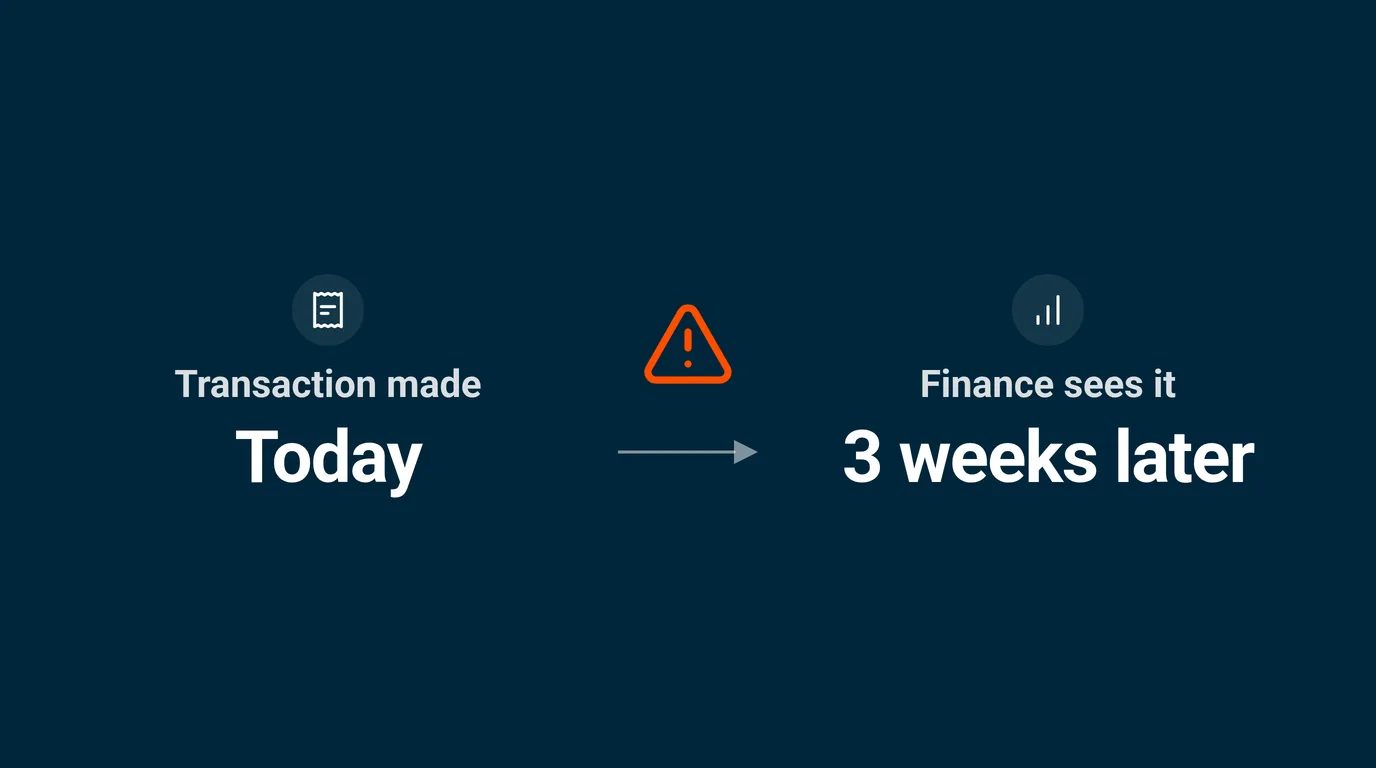
Budgets don't fail because Finance is weak. They fail because accountability is parked too far from the decision.
Most SMEs treat budgets as a Finance artefact. Finance builds them. Finance tracks them. Finance reports the variance. Then everyone is surprised when …

Tax Invoice Requirements in Australia (2026)
A valid Australian tax invoice must show the words “tax invoice”, the seller’s identity and ABN, the date, a description of what was …
The invoice you can't predict: what you need to know before rolling out AI
AI spend is catching finance teams off guard for one simple reason. It behaves nothing like the software cost lines most budgets are built on. Seat …