
Fuel Tax Credit Calculator Australia (Current ATO Rates)
Free fuel tax credit calculator for Australian businesses. Pick when you bought the fuel, enter litres on and off public roads, and estimate your BAS claim.
Estimate your fuel tax credits
Rates apply by the date you acquired the fuel. If your BAS period spans a rate change (a July to September 2026 BAS covers two rate periods), work out each period separately and add them together.
Collecting fuel dockets from every driver to back up your claim? Budgetly gives each vehicle or driver a fuel card that records every fill-up, litres and receipt included.
Let's get fuel receipts off your list for good.
Book a 30-minute demoHow fuel tax credits are calculated
A fuel tax credit gives back some or all of the fuel tax (excise or customs duty) included in the price of fuel you use in your business. The credit for each lot of fuel is:
Fuel tax credit = Litres used × Rate for the date you acquired the fuel and how you used it
There are two main rates for diesel and petrol. Heavy vehicles (over 4.5 tonnes GVM) on public roads get a lower rate, because the road user charge is taken out. All other business uses, such as off-road vehicles, machinery, plant and generators, get the full rate.
Example: from 3 August 2026, a business that uses 1,000 litres of diesel in trucks on public roads and 500 litres in an excavator on site can claim 1,000 × 21.3c + 500 × 53.7c = $213.00 + $268.50 = $481.50.
Fuel tax credit rates for diesel and petrol
Use the rate for the date you acquired the fuel, not the date you lodge your BAS.
| Fuel acquired | Heavy vehicles on public roads | All other business uses |
|---|---|---|
| From 3 August 2026 | 21.3c/L | 53.7c/L |
| 1 July to 2 August 2026 | 20.2c/L | 36.6c/L |
| 1 April to 30 June 2026 | 20.6c/L | 20.6c/L |
| 2 February to 31 March 2026 | 20.2c/L | 52.6c/L |
| 4 August 2025 to 1 February 2026 | 19.2c/L | 51.6c/L |
| 1 July to 3 August 2025 | 18.4c/L | 50.8c/L |
Source: ATO fuel tax credit rates for business, checked 9 October 2026.
Current rates for all fuel types
Rates for fuel acquired from 3 August 2026. LNG and CNG rates are per kilogram.
| Fuel type | Heavy vehicles on public roads | All other business uses |
|---|---|---|
| Diesel, petrol or blends (B5, B20, E10) | 21.3c/L | 53.7c/L |
| E85 | 0c/L | 23.015c/L |
| LPG (duty paid) | 0c/L | 17.5c/L |
| LNG or CNG (duty paid) | 0c/kg | 36.8c/kg |
| B100 | 0c/L | 19.7c/L |
Source: ATO fuel tax credit rates for business, checked 9 October 2026.
Why 2026 had so many rate changes
Most years, fuel tax credit rates change twice, when fuel excise is indexed to CPI in February and August. 2026 had extra changes on top of that:
- 1 April to 30 June 2026: fuel excise was cut by 60.9% and the road user charge was set to zero, so on-road and off-road uses got the same, much lower rate (20.6c/L for diesel and petrol).
- 1 July to 2 August 2026: excise was cut by 30.4% and the road user charge was set to 16.4c/L.
- From 3 August 2026: full excise returned with the August indexation, and the road user charge went back to 32.4c/L.
That means a July to September 2026 BAS spans two rate periods, and fuel acquired from April to June 2026 is claimed at much lower rates than the quarters either side. Using one rate for a whole quarter is the easiest way to get the claim wrong.
Who can claim
To claim fuel tax credits you must be registered for GST when you acquire the fuel and registered for fuel tax credits when you lodge. Common eligible uses:
- Heavy vehicles over 4.5 tonnes GVM travelling on public roads (heavy diesel vehicles must also meet one of the ATO’s environmental criteria)
- Machinery, plant, generators and other equipment
- Light vehicles used off public roads, such as on work sites, farms and mining sites
Fuel used in light vehicles of 4.5 tonnes GVM or less on public roads (cars, small vans, most utes) and fuel used privately aren’t eligible. Check the ATO’s eligibility guidance before you claim.
Records you need to keep
To support a claim, keep records of when you acquired the fuel, the fuel type and quantity, how and where it was used, and the tax invoice. Fuel spread across many drivers, vehicles and paper dockets is where these records go missing. Budgetly fuel cards record every fill-up against the driver and vehicle with the receipt attached, so the records are in one place at BAS time.
Frequently asked questions
How do I calculate fuel tax credits?
Multiply the litres of eligible fuel you used by the ATO fuel tax credit rate for the date you acquired the fuel and the way you used it. For example, 1,000 litres of diesel bought on or after 3 August 2026 and used in a heavy vehicle on public roads earns 1,000 × 21.3 cents = $213.00. The same fuel used in off-road machinery earns 1,000 × 53.7 cents = $537.00.
What are the current fuel tax credit rates?
For diesel, petrol and blends (B5, B20, E10) acquired from 3 August 2026, the rate is 21.3 cents per litre for heavy vehicles travelling on public roads and 53.7 cents per litre for all other business uses. Rates for other fuels are in the table on this page. Rates are indexed to CPI every February and August.
Why is the rate lower for heavy vehicles on public roads?
Fuel used in heavy vehicles on public roads has the road user charge taken out of the credit. From 3 August 2026 the road user charge is 32.4 cents per litre for liquid fuels, which is why the on-road rate is 21.3 cents while other business uses get 53.7 cents.
Who can claim fuel tax credits?
You must be registered for GST when you acquire the fuel and registered for fuel tax credits when you lodge the claim. Eligible uses include heavy vehicles over 4.5 tonnes GVM on public roads and business activities off public roads, such as machinery, plant, generators and light vehicles on work or mining sites. Fuel used in light vehicles of 4.5 tonnes GVM or less on public roads, or for private purposes, isn't eligible. The ATO eligibility guidance has the full rules.
Which rate do I use if my BAS period spans a rate change?
Use the rate that applied on the date you acquired each lot of fuel. If your BAS period covers more than one rate period (for example, a July to September 2026 BAS covers 1 July to 2 August and from 3 August), work out each period separately and add them together.
Why did fuel tax credit rates change so often in 2026?
Fuel excise was cut by 60.9% from 1 April to 30 June 2026, with the road user charge set to zero, and then cut by 30.4% from 1 July to 2 August 2026, with the road user charge at 16.4 cents per litre. Full rates returned from 3 August 2026, along with the usual August indexation. Each change produced a new set of fuel tax credit rates.
Can I claim fuel tax credits I missed?
Yes, within limits. You need to claim fuel tax credits within 4 years of the due date of the earliest BAS in which you could have claimed them, using the rate that applied when you acquired the fuel. This calculator covers fuel acquired from 1 July 2025; for earlier fuel, use the ATO's fuel tax credit calculator or its historical rates.
Methodology and disclaimer
Credit = quantity of fuel × the ATO fuel tax credit rate for the period and use selected, rounded to the nearest cent. Rates are taken from the ATO's published fuel tax credit rates for business for 1 July 2025 onwards, checked 9 October 2026. LNG and CNG rates are per kilogram; all other rates are per litre.
This tool provides estimates only and does not constitute financial, tax, or legal advice. It does not check eligibility, environmental criteria for heavy vehicles, or apportionment for mixed business and private use. The ATO fuel tax credit calculator is the official tool for working out your BAS claim. Always confirm with a registered tax agent or BAS agent.
Every fill-up, already recorded against the vehicle
Budgetly fuel cards record each fill-up against the driver and vehicle, with the receipt attached and litres purchased tracked per vehicle, so your fuel purchase records are in one place when BAS comes around.
Book a 30-minute demoYou might also like
Margin Calculator: Gross Margin, Markup and GP
How to calculate margin, markup and gross profit Start with your cost and your selling price, both without GST if you’re registered for GST. …
Employee Cost Calculator
How to calculate the true cost of an employee The cost of an employee is never just their salary. Once you add the on-costs every Australian employer …
R&D Tax Incentive Calculator Australia
How the R&D tax incentive works The R&D Tax Incentive provides Australian companies with a tax offset for eligible research and development …

Tax Invoice Requirements in Australia (2026)
A valid Australian tax invoice must show the words “tax invoice”, the seller’s identity and ABN, the date, a description of what was …
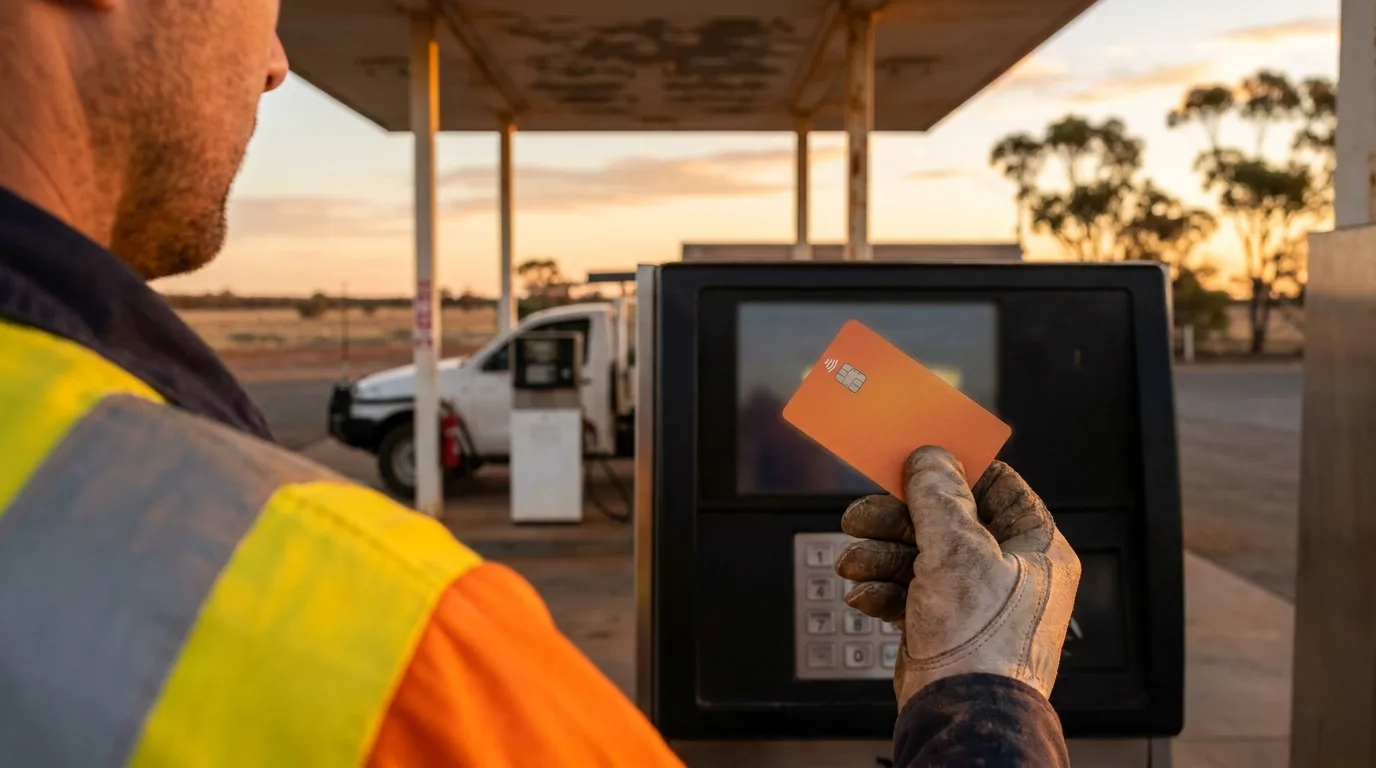
Fuel Cards for Business Australia: Complete Guide 2026
If your drivers are filling up on personal cards, sharing a single fleet card across the team, or submitting fuel receipts weeks after the fact, you …

R&D Tax Incentive 2026-27: What Changed for Startups
The May 2026 Federal Budget delivered the biggest overhaul of the R&D Tax Incentive since 2021. If your startup claims the R&D offset (or …