
Employee Cost Calculator
Free employee cost calculator for Australia. Work out the true cost of an employee: salary plus super, payroll tax, workers' comp and leave loading.
How to calculate the true cost of an employee
The cost of an employee is never just their salary. Once you factor in the on-costs every Australian employer pays, the real number lands well above the headline wage.
Fully-loaded annual cost = Gross salary + Superannuation + Payroll tax (if applicable) + Workers’ compensation + Leave loading
True hourly rate = Fully-loaded annual cost ÷ ordinary hours worked per year
As a rule of thumb, budget 1.2 to 1.3 times the gross salary for a permanent Australian employee before you add one-off costs like recruitment, equipment and training.
The on-costs that sit on top of salary
- Superannuation (~12%): The Super Guarantee rate is 12% from 1 July 2025. It applies to ordinary time earnings and is paid on top of the wage.
- Payroll tax (state-based): A state tax on total wages, payable only once your total Australian wages pass your state or territory threshold. Rates and thresholds differ in every state, so small businesses under the threshold pay nothing.
- Workers’ compensation: A compulsory insurance premium set as a percentage of wages. The rate varies by industry risk and your claims history.
- Leave loading (17.5%): Many awards and agreements pay a 17.5% loading on annual leave. Whether it applies depends on the employee’s award or contract.
Why the true cost matters for planning
Knowing the fully-loaded cost changes how you budget. A $70,000 salary is closer to $85,000 once super, payroll tax and workers’ comp are added, and that is the number you should be planning cash flow and headcount against, not the wage alone. Underestimating it is one of the most common reasons SMEs find their people budget blown out by mid-year.
The salary and on-costs are largely fixed once someone is hired. What moves is the discretionary spend around each person: cards, subscriptions, travel and reimbursements. That is the part you can actually control month to month, and it is where individual employee cards with pre-set limits keep the total cost of a team in check.
What this calculator does not include
This tool estimates the recurring payroll cost of an employee. It deliberately excludes one-off and highly variable costs so the baseline stays honest:
- Recruitment and onboarding
- Equipment, hardware and software licences
- Training and professional development
- Office space and facilities per head
Those are real costs. Add them on top of the fully-loaded figure for a complete picture. If you want to benchmark the operational spend that sits around each employee, use the expense per employee calculator instead.
Calculate the true cost of an employee
Get a more personalised answer
We've built a Budgetly-aware question from your numbers. Edit it if you like, then send it to your AI of choice.



Opens in a new tab with your calculator result for a more personalised answer.
Frequently asked questions
How much does an employee really cost in Australia?
An employee costs more than their salary. On top of the base wage you pay superannuation (12% from 1 July 2025), payroll tax if your total wages exceed your state's threshold, workers' compensation insurance, and often 17.5% leave loading on annual leave. As a rough guide, the fully-loaded cost of an Australian employee is usually 1.2 to 1.3 times their gross salary once these on-costs are added, before you count recruitment, equipment, software and training.
What are employee on-costs?
On-costs are the mandatory and near-mandatory expenses an employer pays on top of gross salary. In Australia the main ones are superannuation, payroll tax, workers' compensation insurance, and leave loading. Some businesses also include the cost of equipment, software licences, and office space per head, though those sit outside the payroll on-costs this calculator focuses on.
Is payroll tax included in the cost of an employee?
Payroll tax is a state tax on the total wages a business pays, not a per-employee charge, and it only applies once your total Australian wages pass your state or territory threshold. Small businesses under the threshold pay none. This calculator lets you switch it on and pick your state so the estimate reflects your situation, but the exact liability depends on your grouping and total wages, so confirm with your accountant.
Does this calculator include recruitment and training costs?
No. This tool estimates the ongoing annual cost to employ someone: salary plus payroll on-costs. One-off costs like recruitment, onboarding, equipment and training are real but vary too much to benchmark, so they are not included. Treat the fully-loaded figure here as the recurring baseline and add your own one-off costs on top.
What is the difference between this and the expense per employee calculator?
This employee cost calculator works out what it costs to employ a person: their salary loaded with super, payroll tax, workers' comp and leave loading. Our separate expense per employee calculator works out something different: the operational (non-salary) business spend per head, like software, travel and office costs, benchmarked against Australian SME averages. Use this one for the cost of hiring; use that one for benchmarking discretionary spend.
Methodology and disclaimer
This calculator starts with gross annual salary and adds: superannuation at the Super Guarantee rate (12% from 1 July 2025); payroll tax at your selected state's headline rate when you switch it on (payroll tax only applies above each state's threshold, and the real rate depends on your total grouped wages); workers' compensation at the premium rate you enter; and leave loading at 17.5% on four weeks of annual leave when enabled. The fully-loaded annual cost is the sum of these; the true hourly rate divides that by 1,976 ordinary hours (38 hours over 52 weeks).
Rates are current as at 1 July 2025. Payroll tax rates and thresholds vary by state and territory and change periodically; workers' comp premiums vary by industry and claims history. This tool provides estimates only and is not financial, tax, or payroll advice. Confirm figures with a registered tax agent, accountant, or your state revenue office.
You just costed the salary. Now control the spend on top.
Payroll is fixed, but the discretionary spend around each employee (cards, subscriptions, reimbursements) is where budgets quietly blow out. Budgetly gives every team member a Visa debit card with its own limit, real-time visibility, and receipts captured automatically.
Book a demoYou might also like
R&D Tax Incentive Calculator Australia
How the R&D tax incentive works The R&D Tax Incentive provides Australian companies with a tax offset for eligible research and development …
What Is This Charge? Bank Statement Lookup
Common bank statement prefixes explained If you see a prefix before the merchant name, it usually identifies the payment processor, not the merchant …
Expense Category Planner
Plan your business expense categories Knowing where your money goes is the first step to controlling it. This free tool helps you map out your expense …
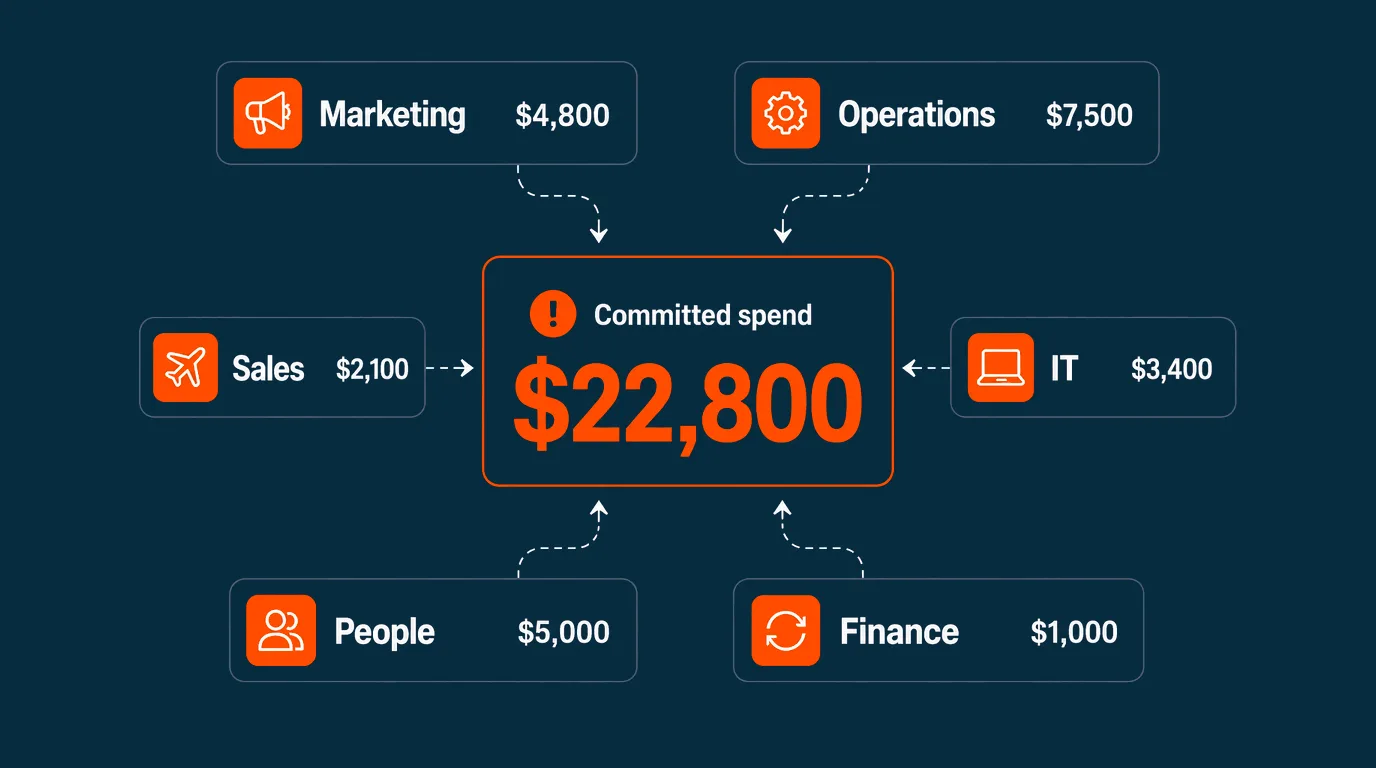
Your bank balance tells you what already happened. Your budget should tell you what's about to.
Your bank balance is telling you what has already happened. Your budget is meant to tell you what is about to happen. When those two numbers drift …

Will AI Replace Accountants? Stephen Moir's Take
Will AI replace accountants? It’s the question finance and accounting people are asking most right now. AI can draft the report, code the …

Controls do not slow a business down. Unclear rules do.
Most business leaders have lived the same loop. The team is moving fast. Spending is decentralised. People are booking travel, buying tools, paying …