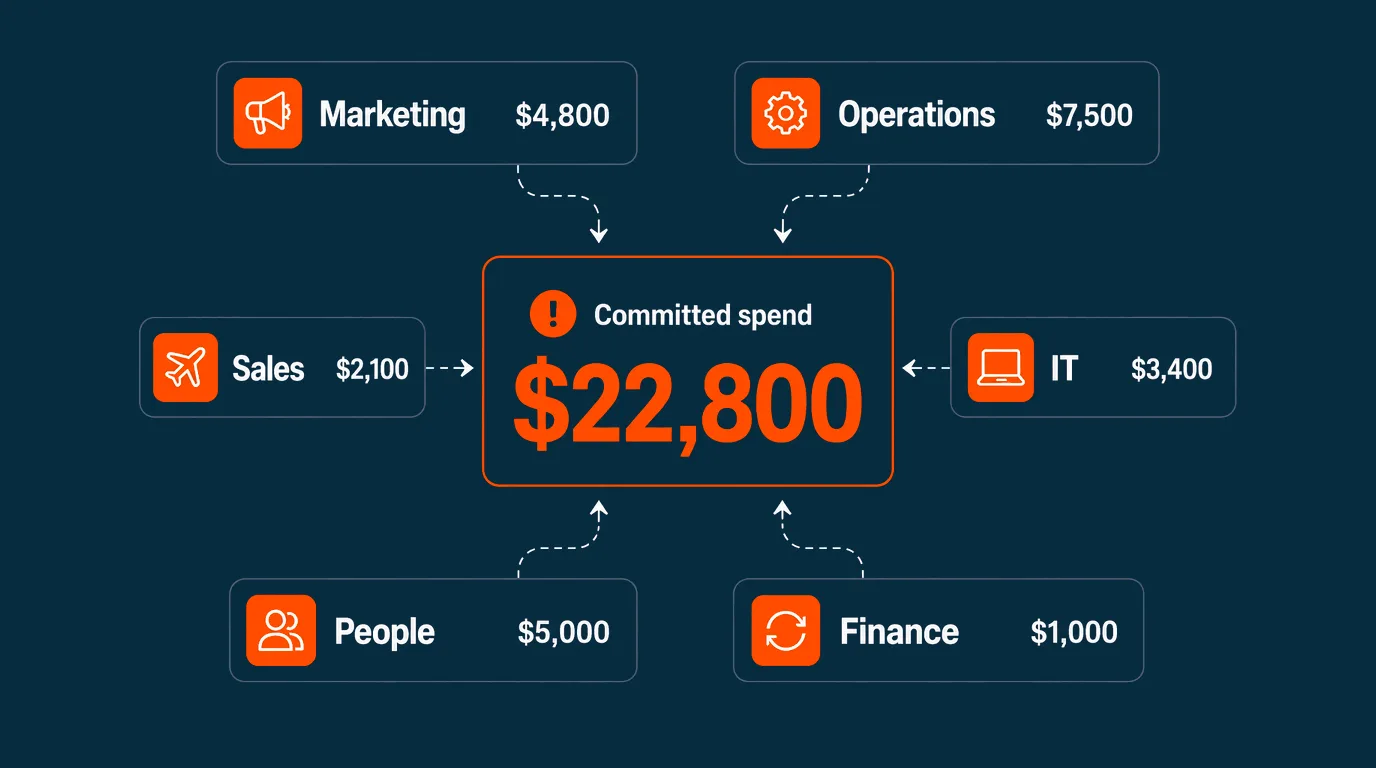


Most Australian SMEs still run their financial processes through a patchwork of spreadsheets, emails, paperwork, and disconnected systems. Expense receipts go missing, budgets blow out without warning, approvals get delayed, and owners never truly know where their cash is going…
These issues compound rapidly as your business grows. What starts as small inefficiencies turns into major financial blind spots. Overspending slips through the cracks, cash flow becomes unpredictable, and month-end reconciliation feels like an endless admin loop. Without clear financial visibility, SMEs operate reactively instead of confidently planning ahead.
A financial management system (FMS) solves this by centralising financial data, automating workflows, and providing real-time visibility across your entire business. In this guide, we’ll break down what an FMS is, why it matters, the essential components, and how an AI-first platform like Budgetly helps Australian SMEs take control of their finances with far greater efficiency and confidence.
- A financial management system helps businesses manage expenses, budgets, revenue, reporting, and cash flow in one central place
- Modern systems use automation and AI to remove manual work and improve accuracy
- SMEs benefit from better visibility, faster decisions, improved compliance, and controlled spending
- Key components include accounting, reporting, budgeting, forecasting, spend management, and governance tools
- Budgetly provides the spend-management layer of a modern FMS through corporate cards, virtual cards, budget controls, real-time expense tracking, integrations, and automated workflows
- An FMS is crucial for SMEs wanting greater operational efficiency, fewer errors, stronger cash flow control, and streamlined financial processes
What is a financial management system?
At its core, a financial management system is a comprehensive platform that manages your business’s complete financial operations. Think of it as the central nervous system for your company’s money, it connects every financial transaction, budget decision, and cash flow movement into one unified view.
Rather than juggling multiple spreadsheets, chasing down receipts, and manually updating budgets, an FMS centralises your income, expenses, budgets, reporting, and cash flow in one place. It automates the manual processes that eat up your time, like expense approvals and reconciliations, while giving you the real-time insights you need to make confident financial decisions.
Integration and automation are key
The key difference between traditional financial tools and a modern FMS is integration and automation. Instead of having your accounting software, expense tracking, budgeting, and reporting all living in separate systems, an FMS brings them together. When your marketing manager makes a purchase with their corporate card, that transaction immediately appears in your budget tracking, gets categorised automatically, and flows through to your cash flow forecasting, all without anyone having to manually enter data.
This isn’t just about making life easier (though it certainly does that). It’s about giving you the financial clarity and control you need to run your business strategically rather than reactively.
Why financial management systems matter for Australian SMEs
The unique challenges facing growing businesses
Australian SMEs face unique financial challenges that larger enterprises simply don’t encounter. When you’re running a business with 10 to 100 employees, you don’t have the luxury of a dedicated finance team to manage every transaction and chase down every receipt.
The reality is that most growing SMEs hit a wall around the 15-20 employee mark. Suddenly, the informal processes that worked when everyone sat in the same room became bottlenecks. You’ve got team members making purchases across different locations, projects that need separate budget tracking, and compliance requirements that can’t be managed through spreadsheets.
Resource constraints and scaling challenges
Limited internal finance resources mean you need automation, not more admin work. Manual workflows that might take five minutes per transaction become hours of work when multiplied across dozens of daily expenses. Growing teams and increasing expenses create complexity that spreadsheets simply can’t handle at scale.
Compliance and visibility requirements
Rising compliance requirements add another layer of complexity. Australian businesses need to maintain detailed records for ATO reporting, manage GST calculations correctly, and ensure proper audit trails for all transactions. When your statement of financial performance depends on accurate, timely data, you can’t afford gaps in your financial processes.
Perhaps most critically, visibility gaps affect cash flow in ways that can seriously impact growth. When you don’t know exactly where your money is going in real-time, you can’t make confident decisions about hiring, investing, or taking on new projects.
Core components of a financial management system
A comprehensive financial management system brings together several key components that work together to give you complete control over your business finances.
General accounting and daily financial operations
The foundation of any FMS is solid accounting functionality. This includes your general ledger, accounts payable, accounts receivable, and payroll management. But unlike standalone accounting software, an integrated FMS connects these elements to your spending, budgeting, and planning tools.
Daily operations like reconciliation become automated rather than manual. When transactions from your corporate cards automatically sync with your accounting system, month-end close becomes a matter of hours rather than days. Tax and compliance requirements are built into the workflow, so GST calculations happen automatically and audit trails are maintained without extra effort.
Revenue, cash, and treasury management
For growing SMEs, understanding cash flow isn’t just important, it’s survival. An FMS provides real-time visibility into money coming in and going out, with forecasting tools that help you plan ahead rather than just react to what’s already happened.
Billing automation ensures invoices go out on time and follow-ups happen systematically. Cash flow forecasting shows you not just where you stand today, but where you’ll be in 30, 60, or 90 days based on current trends and planned expenses.
Financial planning and analysis (FP&A)
This is where an FMS really shines for SMEs. Rather than building budgets in spreadsheets that are outdated the moment you save them, an integrated system lets you create budgets that connect directly to actual spending.
Multi-scenario planning becomes possible when your system can show you how different spending patterns or revenue changes would affect your cash flow. Real-time budget tracking means you always know where each department or project stands against their allocated spending.
Governance, risk, and compliance (GRC)
Growing businesses need proper controls, but they can’t be so complicated that they slow everything down. Modern FMS solutions build governance into the workflow rather than adding extra steps.
Audit trails are automatic, every transaction is tracked with timestamps, approvers, and supporting documentation. Approval workflows can be configured to match your business needs, so small purchases go through quickly while larger expenses get proper oversight.
Expense management and spend control
This is perhaps the most transformative component for SMEs. Modern expense management systems go far beyond just tracking what’s been spent, they provide active control over spending as it happens.
Corporate cards can be configured with spending limits, category restrictions, and approval workflows. Virtual cards let you create specific payment methods for different projects or vendors, with automatic controls and tracking.
Real-time budgeting means every purchase decision is made with current budget information. The expense tracking app functionality captures receipts automatically, eliminates manual data entry, and ensures nothing falls through the cracks.
Modern technologies shaping financial management systems
The financial management systems available today are fundamentally different from what was available even five years ago, thanks to advances in AI, cloud computing, and integration technologies.
AI-driven automation
Artificial intelligence is transforming how SMEs handle routine financial tasks. AI-powered categorisation can look at a transaction and automatically classify it correctly, learning from patterns and becoming more accurate over time. This eliminates the manual work of reviewing and categorising every expense.
Fraud detection algorithms can spot unusual spending patterns and flag potentially problematic transactions in real-time. Predictive spend analysis uses historical data and current trends to forecast future spending patterns, helping with budgeting and cash flow planning.
Cloud-first accessibility
Modern FMS platforms are built for the reality of distributed teams and mobile work. Cloud-first architecture means your financial data and tools are accessible from anywhere, on any device. This is particularly important for SMEs where team members might be working from home, on client sites, or traveling. When your marketing manager can photograph a receipt and submit an expense report from their phone, and you can review and approve it from yours, financial processes don’t slow down just because people aren’t in the office.
Real-time analytics and integrations
Perhaps the biggest advantage of modern FMS platforms is real-time visibility. Rather than waiting until month-end to understand your financial position, you can see live cash flow, team-level spending, and budget tracking updated throughout the day.
Modern FMS platforms integrate seamlessly with existing business tools. The Xero integration available through platforms like Budgetly exemplifies this approach, transactions automatically sync between spend management and accounting systems, eliminating double entry and ensuring consistency.
Financial management system vs accounting software
Many business owners wonder whether they need a full financial management system if they already have accounting software like Xero or QuickBooks.
Accounting software
Financial management system
Tracks past transactions
Manages financial health holistically
Used primarily by accountants
Used by owners, managers, and entire teams
Historical reporting focus
Real-time insights and predictive tools
Limited workflow automation
End-to-end automation and spend controls
Transaction recording emphasis
Strategic financial management emphasis
Understanding the key differences
Accounting software excels at recording what’s already happened. It’s the system of record for your financial transactions, handles compliance reporting, and generates the statements your accountant needs. But it’s primarily backward-looking and doesn’t provide much help with controlling spending as it happens or planning for the future.
A financial management system includes accounting functionality but adds strategic management tools on top. It helps you control spending before it happens, provides real-time visibility into your financial position, and enables proactive decision-making rather than reactive responses.
Think of accounting software as your financial record keeper, while an FMS is your financial operations manager. You need both, but they serve different purposes in your business.
Signs your business is ready for an FMS
How do you know when your business has outgrown simple accounting software and spreadsheet-based financial management? Here are the clear indicators:
Operational complexity indicators
- Multiple people making purchases regularly - When more than three team members have spending authority, manual tracking becomes unmanageable
- Month-end reconciliation takes too long - Spending more than a few hours monthly reconciling expenses wastes valuable time
- Budgets are consistently inaccurate - Regular variances you can’t explain indicate lack of real-time data and proper controls
Visibility and control gaps
- Limited cash flow visibility - If you can’t confidently predict cash position more than a week out, you need better tools
- Missing receipts and documentation - Paper-based expense management inevitably leads to lost documentation
- Approval bottlenecks - When legitimate purchases get delayed due to cumbersome approval processes
- Outdated financial information - Making decisions based on month-old data means operating reactively
Benefits of a financial management system
Improving cash flow health
Cash flow management is the most critical financial challenge for growing SMEs, and a proper financial management system transforms how businesses approach liquidity planning. Real-time inflows and outflows provide the foundation for effective cash flow management.
Rather than relying on bank statements that reflect the past, an FMS shows committed spending, pending approvals, and scheduled payments alongside actual transactions. Spend forecasting uses historical patterns and current trends to predict future cash outflows.
Budget enforcement prevents cash flow surprises by controlling spending as it happens. Scenario modelling capabilities let you understand how different decisions would impact cash flow. Before making large purchases or hiring decisions, you can model the impact on your cash position over the next several months.
Early detection of irregularities helps identify problems before they become serious. The combination of these capabilities transforms cash flow management from reactive firefighting to proactive planning.
Operational improvements
Real-time cash flow visibility transforms decision-making. Instead of wondering whether you can afford new hires or equipment, you can see exactly how decisions would impact cash position over several months.
Automation cuts administrative burden dramatically. Tasks that once required hours, categorising expenses, chasing receipts, preparing reports, happen automatically, freeing teams for strategic activities.
Stronger cost control happens naturally when spending is visible and controlled in real-time. Budget alerts prevent overspending before it occurs rather than discovering problems weeks later.
Strategic advantages
Faster, more accurate reporting means you always have current information for strategic decisions. Improved compliance comes from built-in controls and automatic audit trails. Higher productivity results from eliminating manual processes and approval bottlenecks.
Reduced financial risk comes from better visibility and controls. Unusual spending patterns are flagged immediately, policy violations are caught automatically, and cash flow problems are visible well in advance.
Time-saving
While the benefits of implementing a financial management system are often obvious, the hidden costs of continuing with manual processes are frequently underestimated.
Time cost of manual processes extends far beyond direct hours spent on data entry and reconciliation. When managers spend hours each month chasing receipts and reconciling expenses, that’s time not spent on strategic activities, client relationships, or business development.
Administrative burnout affects both productivity and retention. When capable staff spend significant time on tedious manual processes, job satisfaction decreases and turnover increases.
How Budgetly supports modern financial management systems
While comprehensive financial management systems include many components, spend management has emerged as the most transformative element for Australian SMEs. This is where Budgetly excels, providing an AI-first spend management layer that integrates seamlessly with existing financial systems.
Real-time spend visibility and control
Budgetly provides instant visibility into spending as it happens, not weeks later during reconciliation. Every transaction appears immediately in your dashboard, categorised automatically and applied against the appropriate budget. This real-time visibility gives SME owners and managers the cash flow clarity needed for confident daily decisions.
Corporate cards can be assigned per team member or project, with customised spending limits and category restrictions. Virtual cards provide even more flexibility, allowing specific payment methods for particular vendors or projects.
Automated workflows and smart tools
Budgetly’s automated system captures receipt information instantly, categorises expenses using AI, and routes approvals through customised workflows. Mobile approvals mean managers can review expenses immediately, eliminating bottlenecks.
Beyond card transactions, Budgetly handles bill payments through integrated workflows. The platform’s budget management software provides intelligent insights into spending patterns and suggests adjustments based on actual trends.
Seamless integration
For businesses using Xero, Budgetly’s Xero integration provides seamless data flow between spend management and accounting systems, eliminating double entry and ensuring consistency.
Budgetly helps Australian SMEs eliminate overspending, streamline financial processes, and gain real-time financial clarity needed to operate efficiently and grow confidently.
Best practices for implementing a financial management system
Successfully implementing a financial management system requires careful planning and a phased approach that minimises disruption while maximising benefits. St a rt with expense m a n a gement a n d bu d gets r a ther th a n trying to implement everything simult a neously. These components provi d e imme d i a te v a lue a n d a re typic a lly the e a siest to d eploy.
Clean data before migrating ensures your new system starts with accurate information. Roll out in phases to manageable user groups. Start with one department, validate the processes work effectively, then expand gradually.
Train staff early and thoroughly on both technical aspects and business processes. When team members understand how their actions impact overall financial visibility, they’re more likely to embrace the new system.
Set clear financial policies that align with your system capabilities. Measure adoption and effectiveness through regular reporting on system usage and financial metrics.
Remember that implementing an FMS is as much about process improvement as technology deployment.
Real-world SME scenarios: What an FMS looks like day-to-day
Understanding how a financial management system works in practice helps illustrate the transformative impact on daily operations.
Construction company managing project-based spend
A Sydney construction company with 25 employees previously tracked project expenses through spreadsheets and paper receipts. With an integrated FMS, each site manager has a corporate card configured with their project budget. When they purchase materials, the transaction automatically appears in the project tracking system, categorised appropriately. Overruns are flagged immediately rather than weeks later, enabling proactive cost management.
Hospitality group needing daily visibility
A Melbourne restaurant group operating four venues gained real-time dashboards showing daily revenue and expenses across all locations. Kitchen managers have cards with daily spending limits that reset automatically. Food cost percentages are calculated in real-time, and any unusual spending patterns trigger immediate alerts.
Professional services managing travel and billables
A consulting firm with 30 employees eliminated time-consuming client expense allocation through project-specific virtual cards and automated categorisation. Travel expenses are automatically categorised for billing purposes, and client profitability reporting becomes accurate and timely.
Future of financial management for Australian SMEs
The financial management landscape for Australian SMEs is evolving rapidly, driven by advances in artificial intelligence, changing work patterns, and increasing focus on real-time financial visibility.
Emerging trends
AI first financial processes are becoming the standard rather than the exception. SME focused platforms are incorporating machine learning technologies to provide sophisticated financial intelligence previously available only to larger organisations. Tools like Budgetly’s AI accounting & bookkeeping software show how everyday financial tasks are now being supported by automated classification, proactive insights and conversational assistance.
Autonomous spend control is the next step beyond basic automation, with future systems making spending decisions automatically using predefined rules and learned patterns. At the same time, real time financial ecosystems will connect every business system into a single source of operational intelligence, supported by embedded financial products that blur the line between financial tools and financial services.
For Australian SMEs, these shifts point toward a future where advanced financial management capabilities are more accessible, more affordable and essential for remaining competitive.
Frequently asked questions
What is a financial management system?
Do SMEs really need one?
What's the difference between an FMS and accounting software?
Does an FMS help with cash flow?
Is it expensive to implement an FMS?
How do systems like Budgetly fit into financial management?
Can an FMS reduce overspending?
How long does an FMS take to implement?
Your financial clarity starts today
The difference between businesses that thrive and those that struggle often comes down to financial clarity and control. Australian SMEs face unique challenges that make financial management particularly critical, limited resources mean you can’t afford inefficient processes, while growing complexity demands scalable systems.
A financial management system transforms how your business operates. When every spending decision is made with current budget information, when cash flow is visible and predictable, and when financial processes happen automatically rather than manually, your entire business runs more efficiently.
The technology exists today to provide sophisticated financial management capabilities at SME-friendly prices. Platforms like Budgetly demonstrate how AI-driven systems can provide enterprise-level spend management without enterprise-level complexity.