

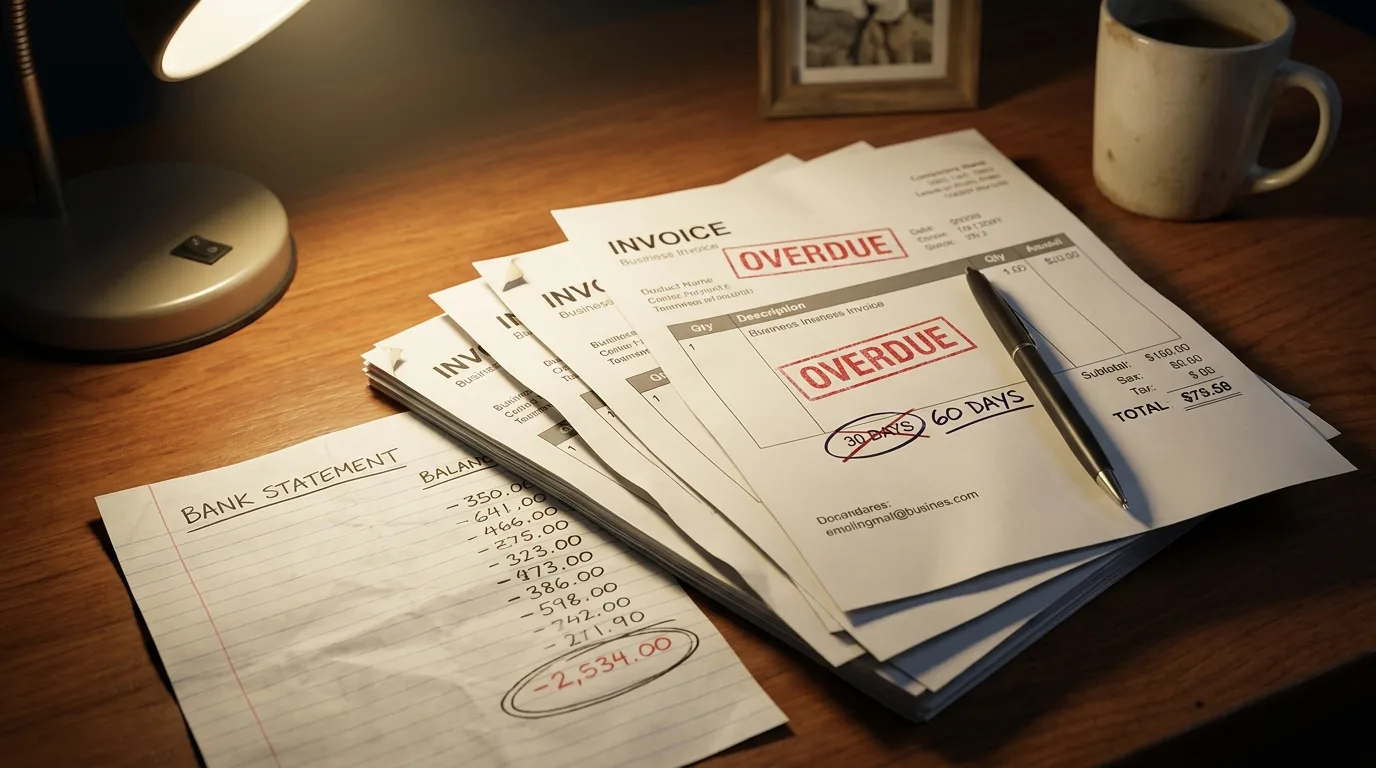
Working capital strain shows up in the timing of money long before it shows up in your P&L. By the time the profit line dips, cash has usually been tight for weeks. The finance leaders who stay ahead of it watch the early signals, not the lagging ones.
Here are the signs worth watching, and the number to check for each.
1. You are paying suppliers slower than you used to
Creeping payment terms are one of the clearest tells. If invoices you once paid in 14 days are stretching to 45, your cash is under pressure whether or not the P&L says so. Track your days payable and watch the trend, not the snapshot.
The Australian benchmark case ASIC v Plymin lists creditors paid outside terms, and suppliers moving you to cash on delivery, among its core indicators of trouble.
2. Your current ratio is drifting toward 1
Current assets divided by current liabilities is the fastest read on working capital. Above 1.5 is comfortable for most SMEs. Sliding toward 1, or below, means you may not have enough short term assets to cover what is due. Plymin names a liquidity ratio below 1 as a red flag. Calculate it monthly, not at year end.
3. The overdraft never goes back to zero
A facility is meant to bridge timing gaps, not fund the business. If your overdraft or credit line sits permanently drawn and you cannot bring it down across a full cycle, you are using short term credit to plug a structural hole. That is a strain signal, not a solution.
4. Tax is the thing that slips
When cash tightens, GST, PAYG and super are often the first payments delayed or pushed onto a plan. Overdue ATO and payroll taxes sit high on the Plymin list for good reason: businesses that cannot pay tax usually cannot pay, full stop.
With Payday Super now removing the quarterly buffer, this signal shows up faster than it used to.
5. Debtor days are climbing and cash lags profit
If you are profitable on paper but the bank never reflects it, your cash is trapped in receivables. Rising debtor days and a widening gap between invoicing and getting paid mean your working capital is funding your customers. Watch the trend in aged receivables weekly.
6. You cannot produce the numbers quickly
A constant lack of cash is the obvious distress sign, but the quieter one is not knowing your position at all. If it takes weeks to answer “how much cash will we have in 30 days,” you have lost the visibility to act.
A rolling 13 week forecast solves this structurally. A weekly finance checklist keeps the operational layer visible between forecast reviews.
None of these alone proves a problem
Together, and trending the wrong way, they are a warning. ASIC’s own advice is direct: companies often cannot be saved because help was sought too late. Catch the signals early, while you still have levers to pull.
If you are seeing two or more of these, the next step is deciding how much working capital you actually need and where the gap sits.
Control should happen before money is spent, not after.