

To create a business budget, list your expected income, list your fixed and variable costs (including the Australian ones most guides skip: super, PAYG and GST/BAS), set a spending target for each category, then compare your actual spend to the budget each month and act on the difference. This guide walks through all six steps, with a free Australian template you can download and fill in.
Most budgeting guides are written for the US and stop at “track your income and expenses.” That leaves out the payments that actually catch Australian businesses out, and it stops at the planning stage, where most budgets quietly fail. This one is built for Australian SMEs and takes you through to the part that matters: making the budget hold.
How to create a business budget in 6 steps
1. List your income
Start with every source of money coming in over the year: sales, recurring contracts, grants, interest. Record what you realistically expect to collect and when, not just what you invoice. A contract worth $60,000 paid quarterly is a different cash reality from $60,000 paid up front.
2. List your fixed costs
Fixed costs are the ones that stay roughly the same each month regardless of activity:
- Rent and utilities
- Salaries and wages
- Insurance
- Loan and finance repayments
- Software subscriptions
These are the easiest to budget because they are predictable. They are also the first place to look when you need to cut.
3. List your variable and Australian tax costs
Variable costs move with your activity: suppliers, inventory, marketing, contractors, travel. Estimate them per month based on last year plus what you know is changing.
Then add the Australian costs the generic templates leave out, because these are lumpy and easy to forget until they land:
- Superannuation guarantee on wages
- PAYG withholding to the ATO
- PAYG instalments if you pay them
- The quarterly GST/BAS payment
Line these up with your ATO lodgement cycle so the big quarterly payments sit in the right month. A budget that forgets the BAS quarter looks healthy right up until the payment is due.
4. Set a target for each category or team
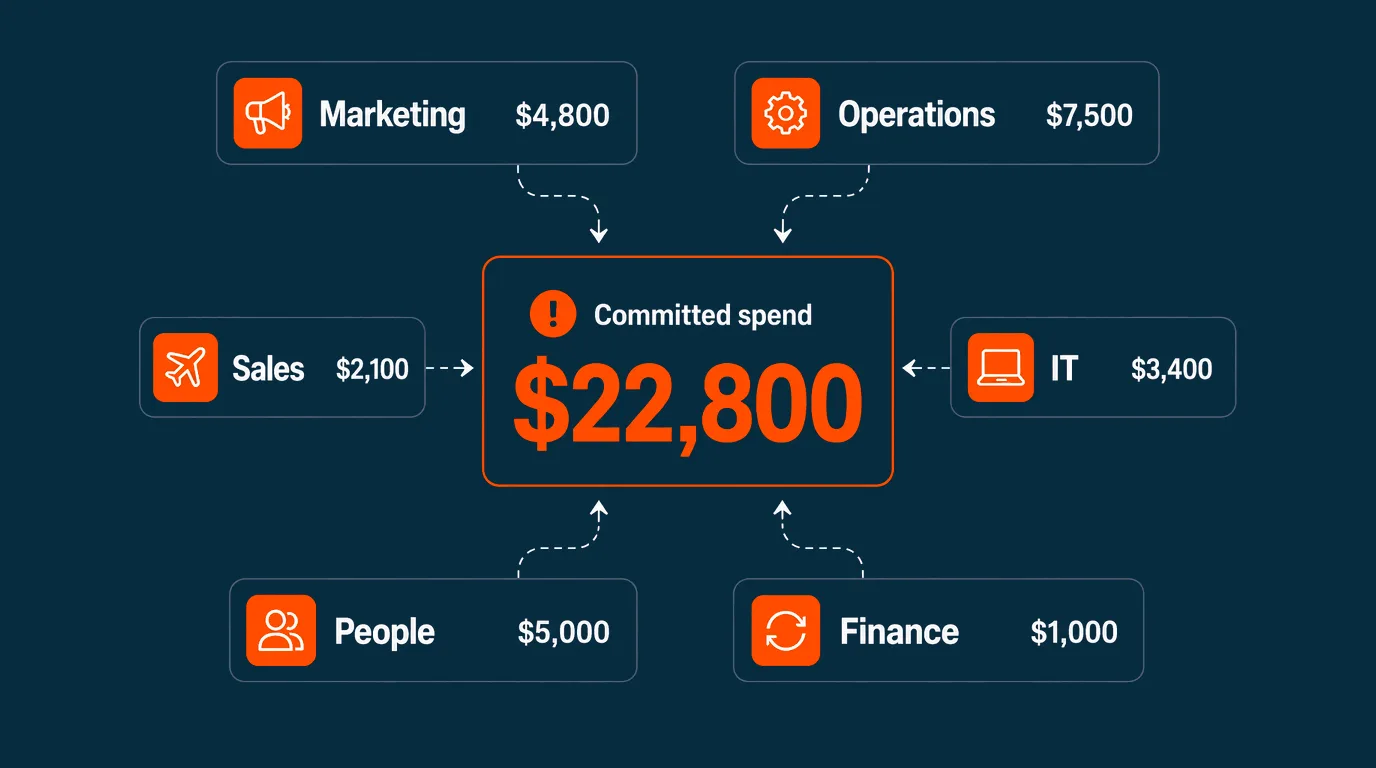
A budget is only useful if it tells you what “on budget” means. Give each category, department or project a spending limit for the period. If marketing gets $24,000 for the quarter, that is the number you will measure against later. This is also where a budget starts to double as an accountability tool: each team owns a number.
5. Compare budget to actual
Each month (or at least each quarter), put your real spend next to the budgeted figure for every category. The difference is your variance. A category that comes in under budget frees up room; one that comes in over is either mis-planned or under-controlled, and you need to know which.
This is the step most businesses skip, and it is the step that turns a budget from a document you wrote in July into a tool you actually use.
6. Adjust and enforce
Act on the variances. Re-plan the categories you consistently mis-estimate. And for the categories that keep overspending no matter how well you plan, planning is not the fix, control is. More on that below.
Download the free Australian business budget template
You do not need to build this from scratch. Our free business budget template is a companion to this guide: a 12-month Australian budget with a budget-vs-actual tab and the formulas already in place. For a forward cash view, our cash flow forecast template uses the same Australian line items. Enter your figures in the blue cells and the totals and variance calculate automatically.
Why business budgets fail (and how to make yours hold)
Here is the uncomfortable truth about budgeting: most businesses do steps 1 to 5 well and still blow the budget. Not because the plan was wrong, but because nothing stopped the overspend.
A budget in a spreadsheet is a number. When your marketing lead spends $31,000 against a $24,000 budget, the spreadsheet does not decline the transaction. It records it, and you find out at month-end. The plan was fine. The enforcement was missing.
This is the gap between budgeting and budget control. A budget describes what should happen. Control determines what can happen. For a growing team, control is what makes the budget hold:
- Each team or project gets a budget with a hard limit
- Spending is tied to a Visa debit card linked to that budget
- When the budget is exhausted, the card declines, before the overspend, not after
- Every transaction is categorised and synced to Xero or MYOB automatically, so your budget-vs-actual is always current
That is the difference between a business that reviews overspending and one that prevents it. The budget is the plan; enforcement is what keeps reality matching it.
Common business budgeting mistakes to avoid
Even a well-built budget can let you down if it falls into one of these traps:
- Budgeting on invoice dates, not cash dates. Your budget can look balanced while your bank account runs dry, because a customer who owes you $40,000 on 60-day terms is not cash you can spend today. Budget against when money actually moves.
- Forgetting the BAS quarter. The single most common Australian budgeting error is planning eleven comfortable months and one month where the GST/BAS payment, PAYG and a super run all land together. Build the quarterly ATO payments in from the start.
- Setting it and forgetting it. A budget written in July and never reopened is a wish, not a tool. The monthly budget-vs-actual review is what makes it work.
- Planning without controlling. Setting a limit does not enforce a limit. If the same categories overspend every quarter no matter how carefully you plan, the problem is not your planning, it is that nothing stops the spend.
- One budget for the whole business. A single top-line budget hides which team or project is driving the overspend. Break it down per department or project so accountability sits with the people making the spending decisions.
Avoid these five and your budget goes from a document you file to a system you run the business on.