

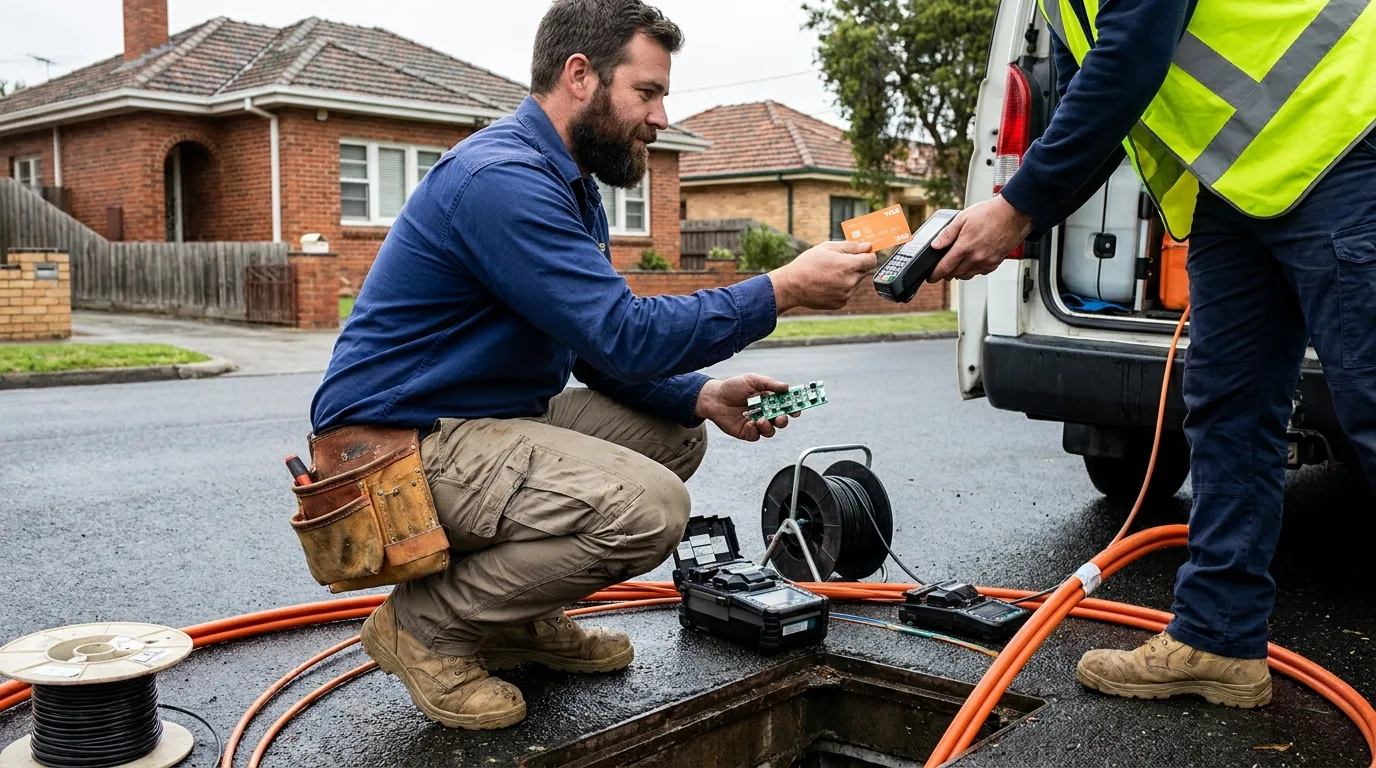
Your field technicians installed 14 new connections last week. Each one required parts from the local supplier, fuel to get there, and the occasional tool replacement. That is 40+ individual purchases across 8 technicians, all paid out of pocket and submitted as reimbursement claims two weeks later. Half the receipts are missing.
Telecom companies run distributed field workforces. Technicians operate from vehicles, visiting customer sites across wide geographic areas. They purchase parts, fuel, and consumables throughout the day from multiple suppliers. When those purchases flow through reimbursements and shared cards, the finance team is permanently two weeks behind reality.
Why expense management breaks down in telecom
Field technicians pay out of pocket and claim later. Most telecom companies reimburse technicians for parts and fuel purchases. This means the company has zero visibility into spending until claims are submitted, often fortnightly. The technician is out of pocket, the finance team is behind, and the data is stale.
Parts purchases are urgent and unplanned. A technician arrives at a job and discovers they need a specific connector, cable, or tool. They buy it from the nearest supplier to avoid returning to the depot. These ad hoc purchases are invisible to the finance team until the claim arrives.
Fuel costs are significant but unattributed. Technicians driving between customer sites accumulate substantial fuel costs. Without per-technician tracking, the finance team sees a total fuel number but cannot identify which routes or technicians are costing more than expected.
Multiple job types blur cost attribution. A technician might complete installations, maintenance, and fault repairs in a single day. Without attribution at the point of purchase, the finance team cannot accurately cost each job type for pricing and profitability analysis.
What replaces the manual process
| Before | After |
|---|---|
| Technicians pay out of pocket for parts | Individual cards per technician with parts budget |
| Reimbursement claims submitted fortnightly | Card tap at supplier, no out-of-pocket spending |
| Fuel costs as a single monthly total | Per-technician fuel tracking in real time |
| No visibility until claims are processed | Real-time spend tracking across the field team |
| Job costing based on estimates | Actual per-job cost data from attributed transactions |
| Manual reconciliation from multiple claim forms | Automatic sync to Xero with job codes attached |
How it works in practice
Per-technician budgets with job attribution. Each technician gets their own Visa debit card with limits for parts, fuel, and consumables. Transactions can be tagged to specific jobs in the app, giving the finance team accurate per-job cost data for pricing and profitability.
One card replaces reimbursements entirely. Technicians never pay out of pocket. They tap their card at the supplier, photograph the receipt, and move to the next job. The finance team sees the purchase in real time. No claim forms, no two-week delays, no missing receipts.
Receipt capture between jobs. The mobile app sends a notification after each transaction. The technician photographs the receipt before driving to the next site. Buddy AI extracts the details and codes the transaction automatically. Ten seconds per receipt, done from the van.
Pre-transaction controls for parts spending. Routine parts purchases (under $200) flow through without approval. Larger purchases route to the team leader for sign-off before the card authorises. This prevents surprise costs while keeping routine operations frictionless.
Results from telecom businesses
Smartscan Locators, a technical services company operating field teams across telecom and utilities, eliminated reimbursements entirely after switching to individual spend cards:
“We streamlined expenses and removed reimbursements completely.”
Smartscan Locators
The elimination of reimbursements means technicians are never out of pocket, claims are never late, and the finance team never processes a reimbursement form. Every purchase is tracked in real time from the moment it happens.
For telecom companies running 10-50 field technicians, the administrative time saved on processing reimbursement claims alone typically exceeds 8-12 hours per month. The visibility gained into per-technician and per-job costs enables pricing decisions that were previously based on estimates.
Getting started
Most telecom companies complete the transition within 14 days:
- Set up per-technician budgets with parts, fuel, and consumable limits
- Issue individual Visa debit cards to all field technicians
- Brief the team on the card and receipt capture app (10 minutes)
- Connect to Xero for automatic transaction sync
- Stop the reimbursement process
For the full telecom feature set, visit the telecom expense management solution page. To see how field team budgets work, watch the demo. For a broader comparison, our 5 best expense management software for Australian SMEs guide weighs Budgetly against four alternatives.