

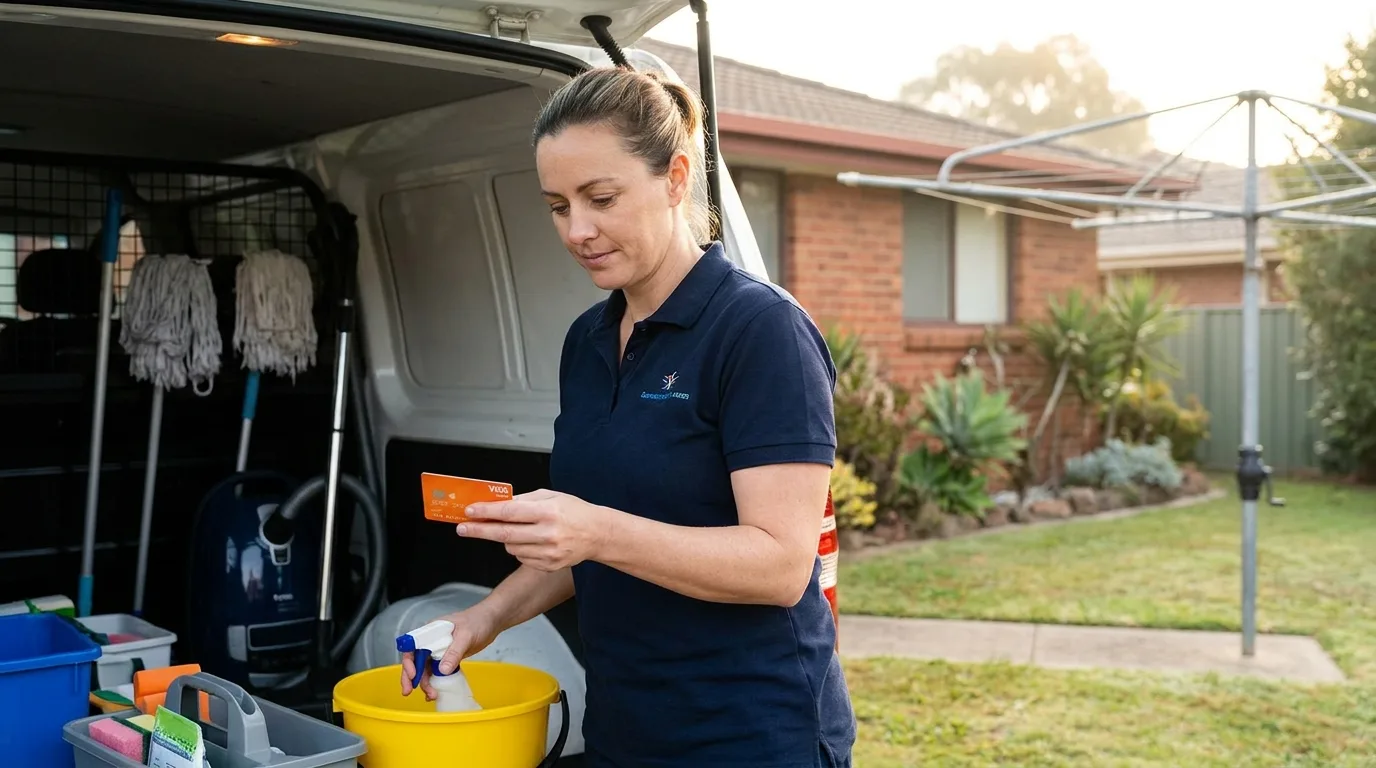
Your crews are on the road by 6am. They buy fuel, cleaning supplies, replacement parts, and the occasional emergency tool throughout the day. By the time they return to base, the receipts are crumpled in a van pocket or lost entirely. The finance team spends Friday afternoon chasing what they can and writing off what they cannot.
Cleaning, gardening, and pest control businesses run mobile workforces. Staff operate from vehicles, not offices. They purchase supplies from hardware stores, fuel stations, and wholesale suppliers throughout the day. Without a system that captures expenses at the point of purchase, the finance team is always reconstructing rather than managing.
Why expense management breaks down in field services
Mobile crews have no office to return receipts to. Unlike office-based businesses where receipts can be dropped on a desk, field service crews finish their day at home or at the next job site. Receipts accumulate in vans, pockets, and glove boxes until someone remembers to hand them in.
Fuel costs are invisible until the statement arrives. Crews driving between client sites accumulate significant fuel costs. A team of 10 vehicles might spend $3,000-$5,000 per month on fuel alone, but the finance team only sees the total when the fuel card or bank statement arrives.
Chemical and supply purchases happen ad hoc. A cleaner runs out of a specific product mid-job and buys a replacement from Bunnings. A gardener needs a new blade for the mower. These small purchases add up quickly and rarely have receipts attached.
Reimbursements frustrate crews and delay visibility. When staff pay out of pocket for supplies and fuel, they submit reimbursement claims days or weeks later. The finance team processes a backlog of stale claims, and the actual spend picture is always two weeks behind reality.
What replaces the manual process
| Before | After |
|---|---|
| Petty cash floats for each crew | Individual cards per crew member with daily limits |
| Fuel cards reconciled monthly | Fuel spend visible per vehicle in real time |
| Reimbursements for supply purchases | Card tap at Bunnings, receipt captured on phone |
| Receipts lost in vans and pockets | Automatic receipt prompt after every transaction |
| No visibility until month-end | Real-time spend tracking across every crew |
| Manual data entry into accounting software | Automatic sync to Xero with transactions pre-coded |
How it works in practice
Per-crew budgets with daily limits. Each crew or vehicle gets its own budget with daily and weekly spending limits. Fuel has its own limit, supplies have theirs. If a crew exceeds their daily fuel budget, the card declines until the next day. No surprises at month-end.
Individual cards for every crew member. Each person who needs to make purchases gets their own Visa debit card. The finance team knows exactly who spent what, where, and when. No more shared cards with no attribution.
Receipt capture from the van. The mobile app sends a push notification after each transaction. The crew member photographs the receipt on their phone before driving to the next job. Buddy AI extracts the details and matches it to the transaction. Done in 10 seconds.
Automatic accounting sync. Transactions flow to Xero in real time. The finance team reviews a clean, coded transaction list rather than reconstructing the week from bank statements and crumpled receipts.
Results from cleaning and gardening businesses
HSC Facility Services, a cleaning and facility services company with 40 employees, replaced reimbursements and cash advances with Budgetly:
“Budgetly has saved us huge amounts of time and money. We save 10 hours per week on expense administration.”
India Robertson, Office Manager, HSC Facility Services
Ten hours per week is 1.5 days returned to the business every week. That time was previously consumed by processing reimbursement claims, chasing missing receipts, and reconciling cash advances.
MJ Landscapes & Maintenance, operating across landscaping and maintenance services, saved two hours per day on expense tracking after replacing their manual process with individual spend cards.
Enterprise Services, a cleaning and facility management company, eliminated spreadsheets entirely and saved half a day per week on reconciliation.
Getting started
Most cleaning and gardening businesses complete the transition within 14 days:
- Set up per-crew budgets with daily spending limits
- Issue individual Visa debit cards to crew leaders and mobile staff
- Brief the team on the card and receipt capture app (10 minutes)
- Connect to Xero for automatic transaction sync
- Stop the petty cash and reimbursement process
For the full feature set, visit the cleaning and gardening expense management solution page. To see how mobile crew budgets work, watch the demo. For a broader look at the market, see our comparison of the 5 best expense management software for Australian SMEs.