
Your case workers spent $2,800 on client support, transport, and program supplies last fortnight. You discovered the total when the receipts arrived in a folder on Monday morning, missing six transactions and with no program attribution for half of them. The acquittal report is due next week.
Civic and social services organisations, whether community centres, welfare agencies, or government-funded programs, manage spending across multiple programs, field teams, and client-facing staff. Every dollar must be accounted for against specific funding streams. When expense tracking relies on petty cash, shared cards, and manual reconciliation, acquittal reporting becomes a reconstruction project.
Why expense management breaks down in civic and social services
Program-funded spending needs program attribution. Government grants and funding bodies require acquittal reports showing exactly how funds were spent against each program. When staff use a shared card or petty cash, the finance team must manually allocate every transaction to the correct program at month-end.
Field staff operate without office infrastructure. Case workers, outreach staff, and program coordinators spend their days in the community, not at a desk. They buy client supplies, pay for transport, and purchase program materials throughout the day. Receipts accumulate in bags and pockets.
Petty cash creates accountability gaps. Many community organisations still use cash floats for small purchases. The cash goes out, some receipts come back, and the difference creates gaps in the acquittal trail that auditors will question.
Volunteer and casual staff complicate tracking. Programs often rely on volunteers and casual workers who make purchases on behalf of the organisation. Without a system that captures expenses at the point of purchase, these transactions are invisible until someone submits a claim.
What replaces the manual process
| Before | After |
|---|---|
| Shared card with no program attribution | Individual cards per program with funding-linked budgets |
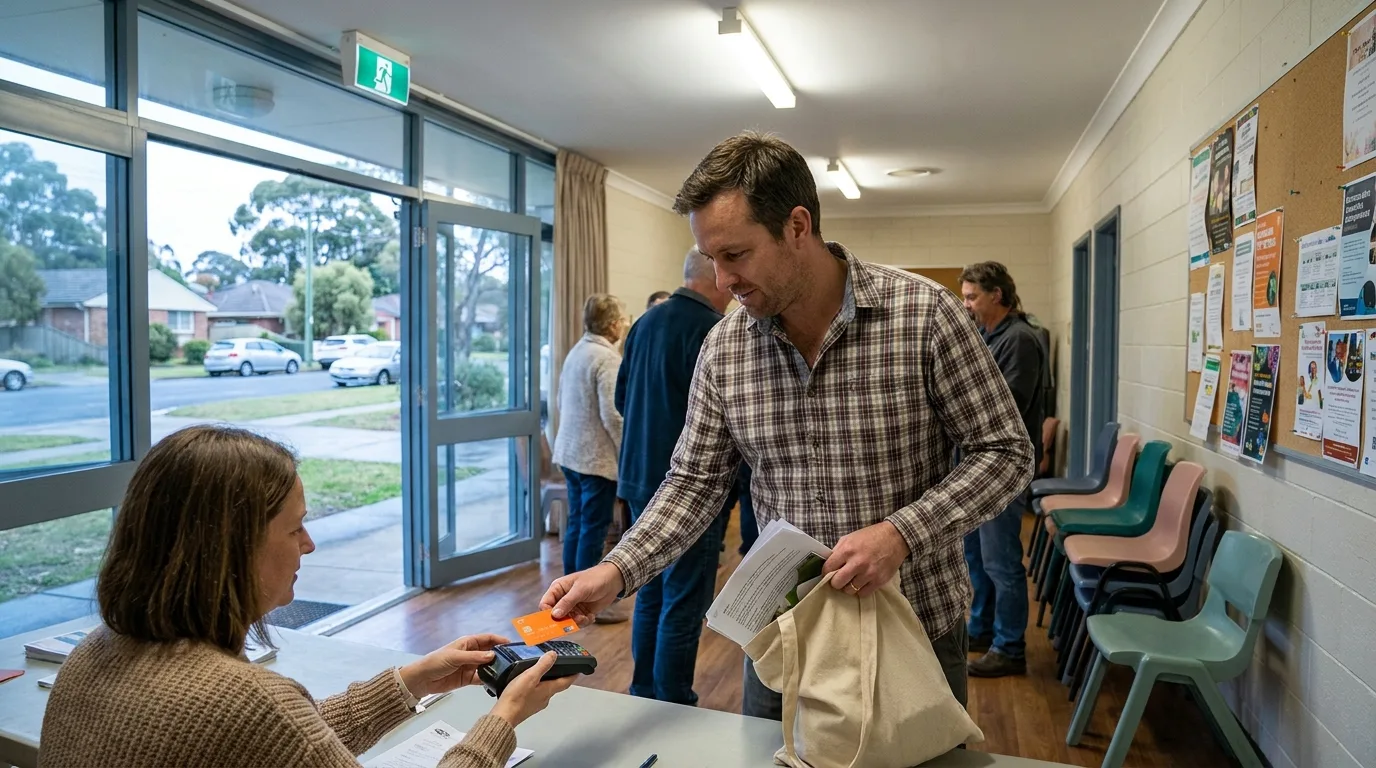
| Petty cash floats with incomplete receipts | Card tap at point of sale, receipt captured instantly |
| Acquittal reports reconstructed from bank statements | Real-time program-level spend data ready for reporting |
| Field staff reimbursed weeks after purchase | Card issued to field staff, no out-of-pocket spending |
| No visibility until month-end | Real-time spend tracking across every program |
| Manual data entry into accounting software | Automatic sync to Xero with program codes attached |
How it works in practice
Per-program budgets aligned to funding streams. Each program gets its own budget matching its funding allocation. Client support has its own limit, transport has its own, and program materials have theirs. When a program’s budget is exhausted, the card declines. No overspend against funding.
Individual cards for field staff. Each case worker or program coordinator who needs to make purchases gets their own Visa debit card linked to their program budget. The finance team knows exactly who spent what, on which program, and when.
Receipt capture in the field. The mobile app sends a notification after each transaction. The staff member photographs the receipt on their phone. Buddy AI extracts the details and codes the transaction to the correct program. Acquittal-ready documentation from the moment of purchase.
Automatic accounting sync with program codes. Transactions flow to Xero in real time with program codes, categories, and receipts attached. Acquittal reporting becomes a filtered export rather than a month-long reconstruction.
Results from civic and social services organisations
Co.As.It. Italian Association of Assistance, a community services organisation, replaced their manual expense process:
“We save 3-4 hours every week on expense administration.”
Co.As.It. Italian Association of Assistance
Three to four hours per week is more than 150 hours per year returned to the organisation. That time was previously consumed by receipt chasing, manual reconciliation, and program cost allocation.
Bawinanga Aboriginal Corporation, a large community services organisation with 200+ employees, saved 38 hours per week after replacing store cards, Auspost cards, and petty cash with individual spend cards:
“We’ve saved a full ‘full-time employee’ each and every week!”
Deborah Jackson, Senior Finance Officer, Bawinanga Aboriginal Corporation
For organisations managing multiple government-funded programs, the compliance benefit is equally significant. Every transaction has its receipt, program code, and staff attribution from the moment of purchase. Acquittal preparation drops from weeks to hours.
Getting started
Most civic and social services organisations complete the transition within 14 days:
- Set up per-program budgets aligned to funding streams
- Issue individual Visa debit cards to field staff and program coordinators
- Brief the team on the card and receipt capture app (10 minutes)
- Connect to Xero for automatic transaction sync
- Stop the petty cash and reimbursement process
For the full feature set, visit the civic and social services expense management solution page. To see how program-linked budgets work, watch the demo. If you are weighing up platforms, our 5 best expense management software for Australian SMEs guide compares features, pricing, and Xero integration.