
Your station hand filled up the ute, bought fencing wire from the rural supplier, and picked up veterinary supplies on the way back. Three purchases, three receipts that should exist. By the time the bookkeeper asks for them next week, two are gone and the third is illegible from sitting on the dashboard in 40-degree heat.
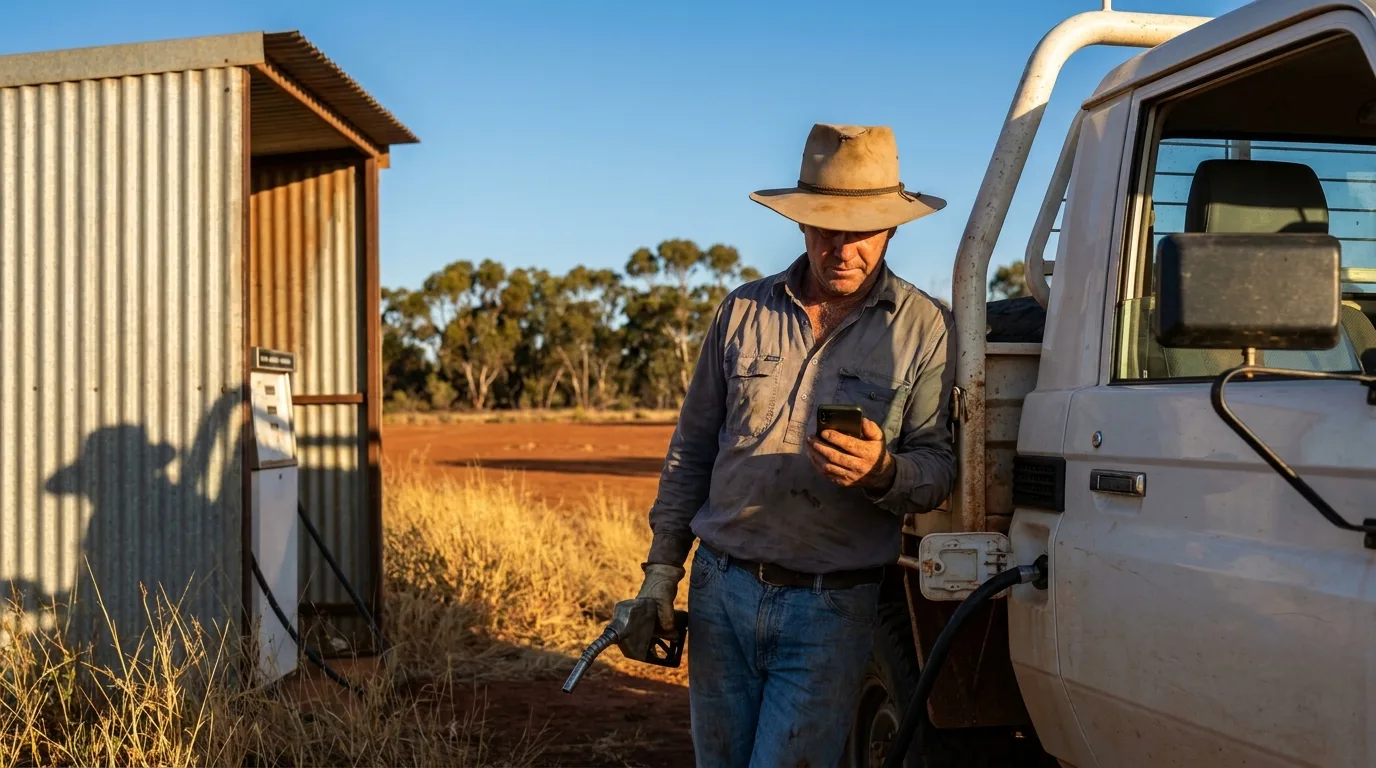
Agriculture businesses operate in environments that are hostile to paperwork. Staff work across remote properties, often hours from the nearest town. Purchases happen at fuel depots, rural suppliers, and livestock agents where internet connectivity is unreliable and office infrastructure does not exist. The finance team, often a part-time bookkeeper, only sees the full picture when the bank statement arrives.
Why expense management breaks down in agriculture
Remote properties mean delayed visibility. When the nearest town is an hour away and the bookkeeper works two days a week, expense visibility is measured in weeks, not hours. The bank statement arrives, the bookkeeper reconciles what they can, and the gaps get written off.
Fuel is the largest untracked cost. Farms and stations consume thousands of dollars in diesel every month across vehicles, machinery, and generators. Without real-time tracking, fuel costs are a single line item on the bank statement with no attribution to specific vehicles, paddocks, or activities.
Seasonal workers create tracking gaps. During shearing, harvest, or mustering, casual workers make purchases on behalf of the property. Without a system that captures expenses at the point of purchase, these transactions are invisible until someone submits a handwritten claim.
Feed and supply costs fluctuate unpredictably. Drought, market prices, and seasonal conditions mean feed and supply costs can spike without warning. Without real-time budget tracking, the farm manager discovers the budget is blown when the bank balance drops unexpectedly.
What replaces the manual process
| Before | After |
|---|---|
| Bank debit card shared across the property | Individual cards per worker with property-linked budgets |
| Fuel costs as a single line on the bank statement | Fuel spend visible per vehicle and activity in real time |
| Receipts lost on dashboards and in ute pockets | Receipt captured on phone at point of purchase |
| Seasonal workers submitting handwritten claims | Cards issued instantly for the season, deactivated after |
| No visibility until the bookkeeper reconciles | Real-time spend tracking accessible from anywhere |
| Manual data entry into Xero or MYOB | Automatic sync with transactions pre-coded |
How it works in practice
Per-property budgets with category limits. Each property or activity gets its own budget. Fuel has its own limit, feed has its own, and fencing materials have theirs. The farm manager sees spend against budget in real time from their phone, even in areas with limited connectivity (transactions sync when signal returns).
Individual cards for every worker who purchases. Each person who needs to buy supplies gets their own Visa debit card. The bookkeeper knows exactly who spent what, where, and when. No more shared cards with no attribution.
Receipt capture that works in the paddock. The mobile app sends a notification after each transaction. The worker photographs the receipt on their phone. Buddy AI extracts the details when connectivity is available. Even if the receipt photo is uploaded hours later, it is matched to the correct transaction.
Instant cards for seasonal staff. Virtual cards are issued in seconds for seasonal workers. When shearing or harvest ends, the cards are deactivated. No physical cards to collect, no risk of cards being used after the engagement ends.
Results from agriculture businesses
Blacksheep Trading, an agricultural business, replaced their bank debit card process with Budgetly:
“We removed the bank debit card hassle entirely.”
Blacksheep Trading
Arvensis Research, operating across agriculture and research, eradicated their complicated bank credit card processes after switching to individual spend cards with pre-set controls.
West Midlands Group, an agricultural research and community organisation, moved to complete expense automation, eliminating the manual reconciliation that consumed their small finance team’s time.
For agriculture businesses where the bookkeeper works part-time and staff are spread across remote properties, the time savings are proportionally larger than office-based businesses. Every hour saved on reconciliation is an hour the bookkeeper can spend on BAS preparation, budgeting, or advisory work.
Getting started
Most agriculture businesses complete the transition within 14 days:
- Set up per-property budgets with category spending limits
- Issue individual Visa debit cards to farm managers and workers
- Brief the team on the card and receipt capture app (10 minutes)
- Connect to Xero for automatic transaction sync
- Stop the shared bank card and reimbursement process
For the full agriculture feature set, visit the agriculture expense management solution page. To see how property-based budgets work, watch the demo. For a broader view of your options, our comparison of the 5 best expense management software for Australian SMEs covers Budgetly alongside four alternatives.