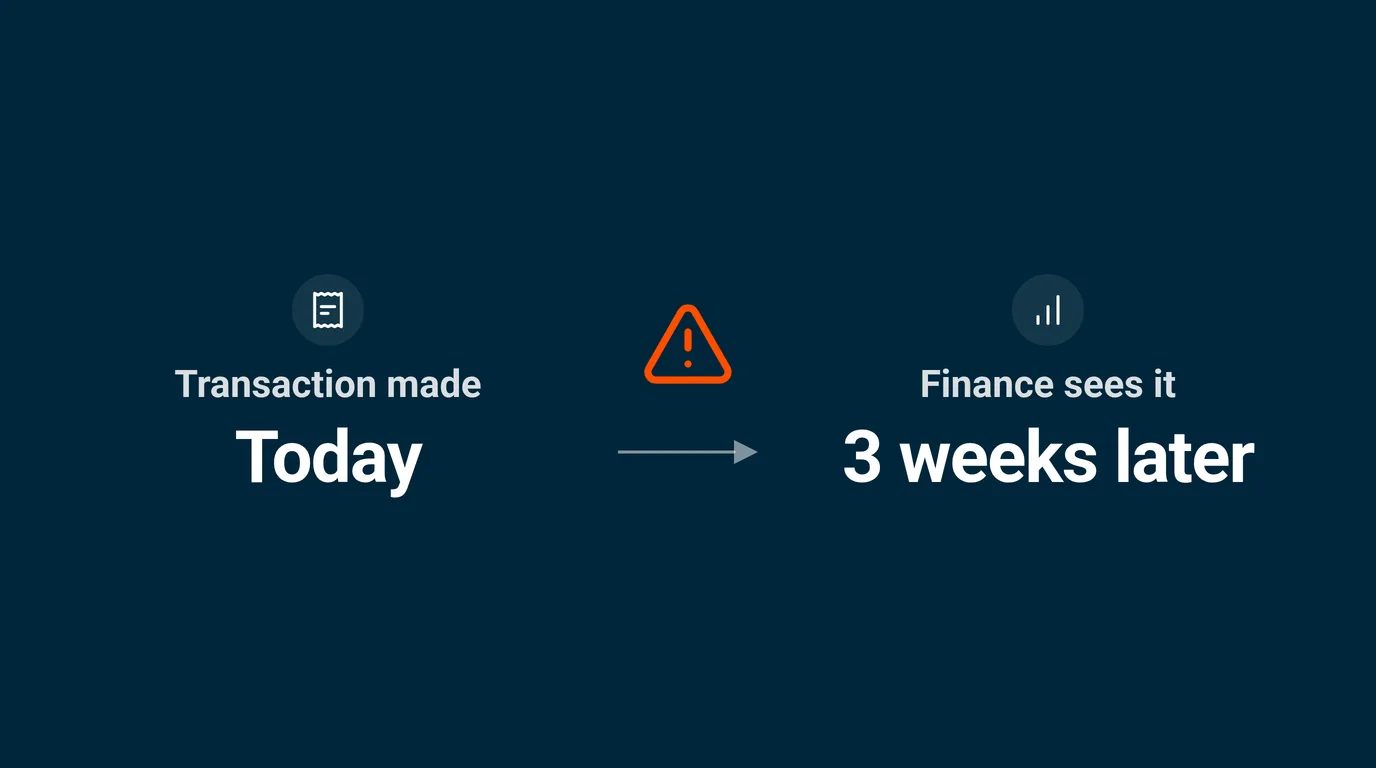

Most business leaders have lived the same loop. The team is moving fast. Spending is decentralised. People are booking travel, buying tools, paying contractors, and ordering what they need to ship work. Then month end arrives and Finance is forced into detective work. Who approved this. Which budget was it meant to come from. Why is there a new subscription. Where is the receipt. Is this legitimate or simply a process gap.
The reaction is predictable. Add approvals. Add limits. Add forms. Add a policy doc nobody reads. The business slows down, and high performers find workarounds because they still have work to do.
That is why “controls” get blamed for friction.
The real issue is not controls. It is controls that are late, manual, and inconsistent.
Spend accountability only creates speed when it is proactive. It needs to happen before money moves, with guardrails that make the right action the easy action. When it is done well, controls remove negotiation. They remove back and forth. They remove uncertainty. They remove the hidden admin that sits behind every purchase request and every reimbursement.
Good controls are not a brake. They are a set of rails that let the business move faster without derailing.
Why business leaders feel controls create friction
Controls feel like friction for three reasons.
First, they often arrive after something has already gone wrong. A surprise bill, a budget blowout, a fraud event, or a messy audit. The fix is rushed, and the business gets a blunt instrument, not a system.
Second, controls are frequently designed around Finance’s pain, not the team’s workflow. If a process solves month end but adds five steps to every purchase, it will be ignored. You do not get accountability. You get shadow spend.
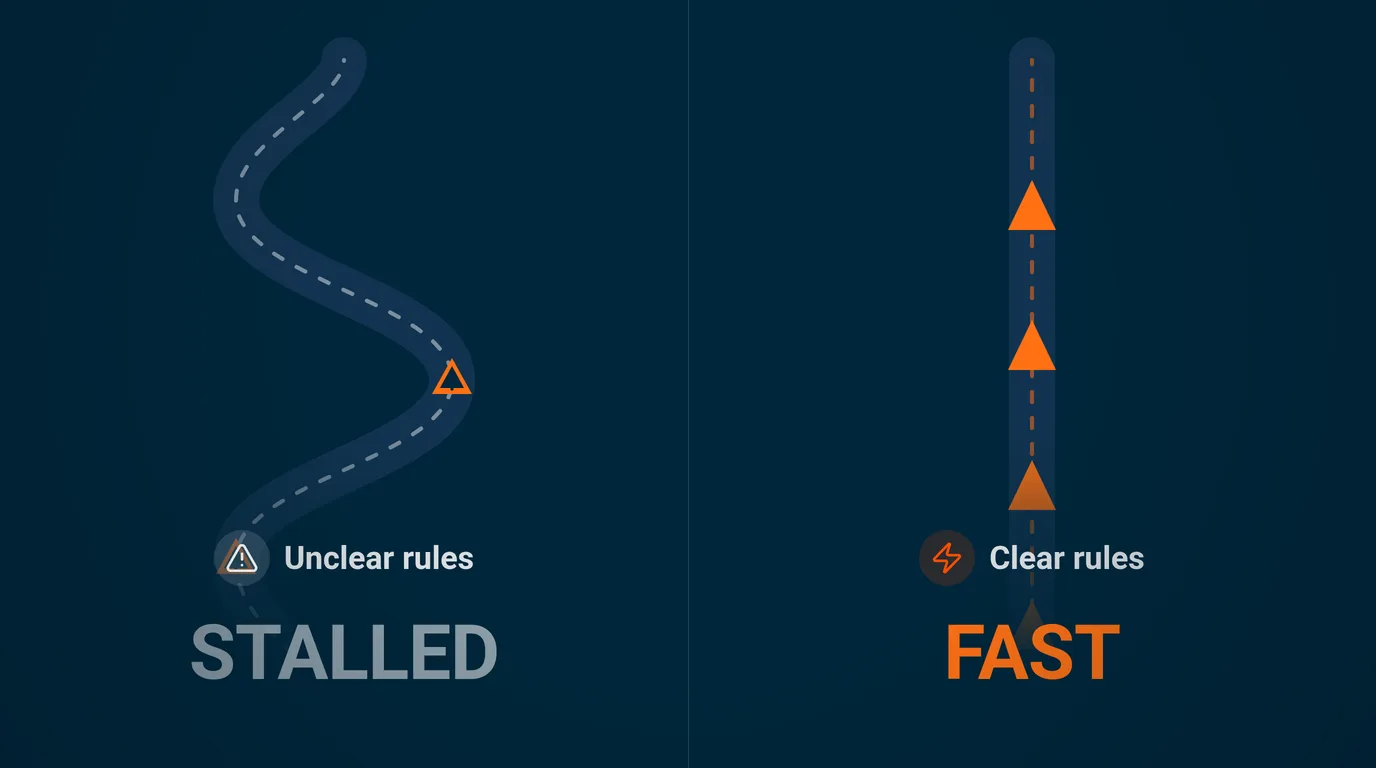
Third, the rules are unclear. People do not know what is allowed, what needs approval, or what information is required. Uncertainty creates the real slowdown. People pause. They ask. They wait. Or they spend first and explain later.
The answer is to shift from reactive controls to proactive spend accountability.
Proactive control is an enabler of speed
Proactive control means the decision is made at the moment it matters.
Not after the statement arrives. Not after the receipt chase. Not when someone is already out of pocket.
The decision happens when the business is committing to spend. That is when intent is clear. Context is available. The right approver is easiest to reach. The budget impact can be understood in real time.
This is where accountability becomes fast. A clear system turns a messy human negotiation into a predictable workflow.
Instead of, “Can I buy this” followed by an email chain, it becomes, “This is within policy and budget, so it proceeds.” Or, “This needs approval, so it goes to the right person with the right context.”
Speed comes from reducing the number of decisions a human needs to make.
The framework for accountability without slowdown
If you want a culture of spend accountability that supports speed, build it around four principles.
1. Visibility for the people spending
Accountability starts with visibility. If someone cannot see what budget they are spending from and what is left, they will either overspend or underspend.
Both are costly.
When budgets are visible, spend decisions become better without extra process. People self correct. They choose alternatives. They time purchases. They stop duplicates. They ask the right questions before buying.
This is a leadership move, not a finance move. When visibility is missing, Finance becomes the interpreter of reality. That bottleneck slows everything.
Make budget visibility the default. Not an exception.
2. A short list of non negotiables
A culture is built on clarity. The goal is not to document every edge case. The goal is to define a few rules everyone remembers.
For example: what types of spend always require approval, what types of spend never require approval, what types of spend are never allowed, and what evidence is required for audit readiness.
Keep it short. Five to ten rules is enough.
Then make the rules consistent. Nothing kills adoption like inconsistent enforcement. If one person gets waved through and another gets blocked, the process becomes political. People stop trusting it, and they work around it.
Consistency is faster than discretion.
3. Push decisions upstream
This is the heart of speed.
If approvals happen after the spend, accountability becomes a clean up exercise. It creates friction for everyone. Finance has to chase. Teams feel policed. Leaders feel blindsided. Month end becomes a reconstruction.
Upstream control means approvals happen at the point of commitment.
That could be before a card payment, before a bill is paid, or before a vendor is engaged. It means the system collects the context once, routes it once, and records it once.
When the decision is made early, everything downstream becomes simpler. The transaction is already attributed. The budget impact is known. The audit trail exists. The questions that usually take hours at month end are answered in seconds.
4. Measure the workflow, not just the dollars
Most organisations try to improve spend accountability by measuring spend. That misses the real lever.
Measure friction: time to approve, number of back and forth messages, missing receipt rate, percentage of transactions that arrive coded correctly the first time, and rework required at month end.
When these improve, speed improves. When these worsen, you are building a system that will be bypassed.
The goal is a workflow that reduces admin and increases confidence at the same time.
What “good” looks like in practice
In a high functioning culture of spend accountability, teams do not feel slowed down. They feel supported.
People know their budget. They know the rules. They can spend quickly when it is within guardrails. They can get fast approval when it is outside guardrails.
Finance does not chase for context because the context was captured at the moment of spend. Leaders do not get surprised at month end because visibility is real time.
Accountability becomes a normal part of how work happens, not a special event that happens after something breaks.
The leadership reframe
This is the key mindset shift for business leaders.
Controls are not about saying no. They are about making yes easier.
They make it easier to spend with confidence. They make it easier to delegate without fear. They make it easier to move quickly without discovering issues weeks later.
If you want speed, you need systems that reduce uncertainty. Spend accountability is one of those systems.
The fastest businesses are not the ones with no rules. They are the ones where the rules are clear, the workflow is simple, and the system handles the admin.
Accountability is not a brake. It is how the business earns the right to move faster.