
Your team is still paying for work expenses out of their own pockets, then waiting for the business to pay them back. Someone photographs a receipt, fills in a claim, waits for approval, and the money lands a fortnight later. Finance keys it in, codes it, and reconciles it at month-end. If you are shopping for expense reimbursement software, you want that cycle to hurt less.
This guide compares the reimbursement software Australian SMEs actually consider, what to check before you buy, and one option most comparison pages skip: not reimbursing employees at all.
What is expense reimbursement software?
Expense reimbursement software is a tool that manages the process of paying employees back for business costs they covered personally. It captures the receipt, routes the claim for approval, applies your expense policy, and records the payment against the right account in your books.
Good reimbursement software replaces three manual jobs: collecting and storing receipts, checking each claim against policy, and coding the spend for your accounting system. For an Australian business, the parts that matter most are receipt capture with GST extracted correctly, approval rules that match how your team actually works, and a clean two-way sync to Xero or MYOB so finance is not rekeying anything.
One thing worth saying up front. Reimbursement software makes the claim cycle faster. It does not remove the claim cycle. The employee still spends their own money and still waits to be paid back. Keep that distinction in mind as you compare, because it changes which tool is right for you.
What to look for in reimbursement software
The feature lists on vendor sites look identical. These are the things that actually separate the tools for an Australian SME.
- Receipt capture with GST handling. Photographing a receipt is table stakes. Pulling the GST out correctly, in AUD, so your BAS is right, is not. Check whether GST extraction is built for Australian tax or bolted onto a US-first product.
- Xero and MYOB integration. A real two-way sync, not a nightly CSV export. Coded transactions should land in your accounting system without anyone rekeying them. Ask to see the integration, not a logo on a page.
- Approval rules that fit your team. Multi-step approvals, per-department limits, and delegation when someone is on leave. If the rules are rigid, people route around them and you lose the control you paid for.
- Pricing that does not punish growth. Per-user pricing gets expensive as you add casual, contract, and seasonal staff. Per-claim or per-payment fees quietly tax every transaction. Read how the pricing scales before you sign.
- Australian support. When a payment fails the week of BAS, you want someone in your timezone who understands Australian tax, not a ticket queue in another hemisphere.
- The honest question: do you need claims at all? The most useful thing to check is whether you need a reimbursement workflow in the first place. If you can give staff pre-approved cards, the claim never happens. More on that below.
The best expense reimbursement software for Australian SMEs
Here is how the main options compare for a business with 20 to 200 employees. Budgetly is included because it solves the same problem from the other direction, by removing the claim rather than processing it.
| Tool | Best for | Receipt capture | Issues cards? | AU GST and accounting | Pricing shape |
|---|---|---|---|---|---|
| Budgetly | AU SMEs who want to stop reimbursing staff | Yes, at point of sale | Yes, Visa debit per person | Built for AU, deep Xero and MYOB sync | Flat rate, unlimited users |
| Zoho Expense | Micro teams on a tight budget | Yes, manual photo | No cards (claims continue) | Generic, not AU-specific | Per user, per month |
| SAP Concur | Large enterprises | Yes | No cards (claims continue) | Global, AU as an add-on | Quote-based, complex |
| Expensify | US-first teams wanting a simple app | Yes, SmartScan | Card in some markets | US-first, generic GST | Per user, per month |
| MYOB | Teams already deep in MYOB | Limited | No | AU accounting, basic capture | Bundled with plan |
A quick read of each:
Zoho Expense digitises the claim process and costs little, which suits a team under 10 who can live with a reimbursement workflow. It does not issue cards, so employees keep paying out of pocket, and the GST handling is generic rather than built for Australian tax.
SAP Concur is powerful and built for large, complex organisations with travel programs and global entities. For a 50-person Australian business it is usually more product, and more setup, than the problem needs.
Expensify is a tidy app with strong receipt scanning, but it is a US-first product. GST handling is generic and the per-user pricing adds up as your headcount moves.
MYOB handles Australian accounting well and offers basic expense features if you are already on it, but receipt capture is limited and it does not issue cards, so the reimbursement workflow stays manual.
Budgetly takes a different path. Instead of making reimbursement claims faster, it gives every employee a pre-approved Visa debit card with a built-in limit. The spend is controlled before it happens, the receipt is captured at the register, and the coded transaction syncs straight to Xero or MYOB. There is no claim to approve because the employee never spent their own money.
If you want to see that difference on your own workflow, a short walkthrough is the fastest way.
Do you even need reimbursement software?
This is the question the comparison sites skip, because most of them sell reimbursement software and have no reason to ask it.
Reimbursement exists because the business has no way to let an employee spend money safely in the moment. So the employee uses their own card, and you build a process to pay them back. Software can make that process faster. It cannot make the employee stop being out of pocket, and it cannot give you control before the money leaves.
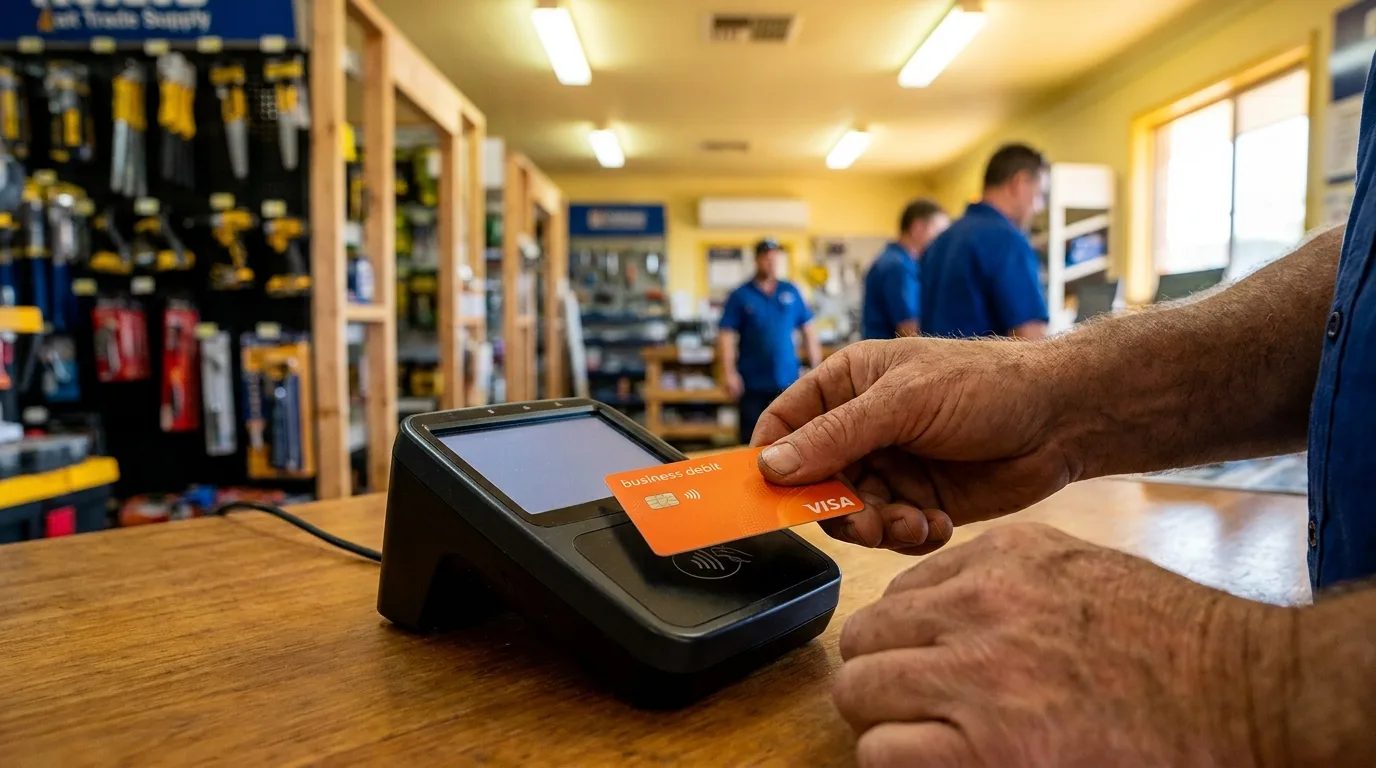
Give each person a card with a limit and a budget, and the entire claim cycle disappears. No out-of-pocket spending. No claim to lodge. No approval queue. No reimbursement run. The receipt is captured when the card is tapped, and the transaction is coded and in your accounting system the same day.
Bawinanga Aboriginal Corporation saved 38 hours a week by moving its team off reimbursements and receipt chasing onto pre-approved cards. Connecting Families saved more than $21,000 by switching. Across 82 case studies and a 99% customer retention rate, the pattern holds: removing the claim beats speeding it up.
So before you buy software to run a reimbursement process, it is worth asking whether you should be running one at all.
Reimbursement software vs company cards
The honest way to choose is to match the tool to how you want money to leave the business.
Choose reimbursement software if employees must sometimes spend their own money first and you want the pay-back process to be faster and cleaner. That is a real situation for some teams, and a tool like Zoho Expense or Concur handles it.
Choose company cards if you would rather the out-of-pocket spending never happen. Each employee gets a card with a pre-set limit, finance sees every transaction in real time, and there is nothing to reimburse. This is the model Budgetly is built around, and it is why we argue the strongest fix is removing the claim, not automating it.
If you are weighing the two, our guide on how to eliminate employee reimbursements in 14 days walks through the switch step by step. If you want the broader category view, see our comparison of the best expense management software for Australian SMEs.