
Choosing the best business bank account is a crucial decision for any company, whether you’re a startup, a growing business, or an established enterprise. The right account can help manage cash flow, reduce fees, and improve financial efficiency, while the wrong choice can lead to unnecessary costs and administrative hassles.
In this guide, we’ll explore what business bank accounts are, why they matter, and how to choose the best one for your needs. We’ll also discuss essential features to look for, common mistakes to avoid, and how Budgetly can support your business with better financial management tools.
- What is a business bank account?
- Why does your company need a business bank account?
- Who should open a business bank account?
- When should a business open a bank account?
- Types of business bank accounts
- Key features to look for in a business bank account
- Common mistakes businesses make when choosing a bank account
- Best business bank accounts in Australia
- How Budgetly helps businesses manage expenses efficiently
- Final thoughts on choosing the best business bank account
What is a business bank account?
A business bank account is a specialised account designed to handle a company’s financial transactions separately from personal finances. These accounts offer features tailored for businesses, such as higher transaction limits, business-friendly fee structures, and integrations with accounting software.
Unlike personal accounts, business bank accounts may come with additional security measures, multi-user access, and payment processing capabilities, making them essential for managing company finances.
Why does your company need a business bank account?
Opening a dedicated business bank account provides numerous advantages, including:
- Separation of business and personal finances – Keeps financial records organised and simplifies tax reporting.
- Professionalism – Allows clients and suppliers to transact with a business-branded account rather than a personal one.
- Easier tax filing – Helps track business-related income and expenses for tax purposes.
- Better cash flow management – Provides insights into business revenue and spending.
- Access to financial services – Some banks offer business loans, overdrafts, and credit facilities tied to business accounts.
Reviewing your company’s expense management process? Check out these free Budgetly resources:
## Who should open a business bank account?
A business bank account is recommended for:
- Sole traders – While not legally required, it simplifies financial management.
- Partnerships – Helps maintain clear financial records between multiple partners.
- Small businesses – Necessary for receiving payments, paying expenses, and tracking finances.
- Companies – Required by law for Pty Ltd and other incorporated entities.
Even if you’re a freelancer or self-employed, having a business account can make financial tracking much easier.
When should a business open a bank account?
It’s best to open a business bank account as soon as your business is operational. Some key times to consider opening one include:
- When registering your business – If you’re setting up a company, partnership, or trust.
- Before accepting payments – A business account ensures that customer payments go directly to the company.
- When hiring employees – Payroll processing becomes easier with a dedicated account.
- When applying for business loans or credit – Some banks require an existing relationship before approving loans.
Opening a business bank account early on can prevent future financial complications.
Types of business bank accounts
Businesses may require different accounts depending on their needs. Here are the main types of business bank accounts:
1. Transaction accounts
The most common type, used for daily banking, payments, and deposits. It often includes a debit card and online banking.
2. Savings accounts
Designed to help businesses earn interest on surplus cash while keeping funds accessible.
3. Merchant accounts
Used for accepting card payments from customers. These are essential for businesses with high transaction volumes.
4. Foreign currency accounts
Best for businesses dealing with international transactions, as they allow holding funds in different currencies.
5. Business credit card accounts
Provides flexible spending options with potential rewards and interest-free periods.
Choosing the right type of account depends on how your business operates and what financial features you need.
Key features to look for in a business bank account
When choosing a business bank account, look for these important features:
- Low or no monthly fees – Avoid excessive banking costs that eat into your profits.
- Transaction limits – Some accounts limit the number of free transactions per month.
- Integration with accounting software – Seamless syncing with Xero, MYOB, or QuickBooks can simplify bookkeeping.
- Ease of access – Mobile and online banking should be user-friendly and secure.
- Overdraft and credit options – Some accounts offer short-term financing options.
- Multi-user access – Businesses with teams may need multiple authorised users.
Assessing these features can help find the best fit for your business operations.
Common mistakes businesses make when choosing a bank account
Some businesses face issues by not carefully evaluating their banking needs. Here are common mistakes to avoid:
- Choosing based on brand recognition alone – Compare features instead of just opting for a well-known bank.
- Not checking transaction fees – Some banks charge for transactions beyond a set limit.
- Overlooking integration options – Ensure the account works with your accounting or expense management software.
- Ignoring credit facilities – If you plan to take business loans, choose a bank that offers them.
- Skipping customer service reviews – A bank with poor service can lead to frustrations down the road.
Carefully reviewing account features prevents unexpected fees and limitations.
Best business bank accounts in Australia
Some of the best banks for business accounts in Australia include:
- Commonwealth Bank – Offers transaction accounts with fee waivers for startups.
- ANZ Business – Provides competitive credit facilities and savings accounts.
- Westpac Business – Includes online invoicing features for easy client payments.
- NAB Business – Offers low-fee business accounts with overdraft options.
- Macquarie Business Banking – Great for high-volume transactions and digital banking.
Each bank has unique benefits, so it’s important to compare based on business size, transaction needs, and additional services.
How Budgetly helps businesses manage expenses efficiently
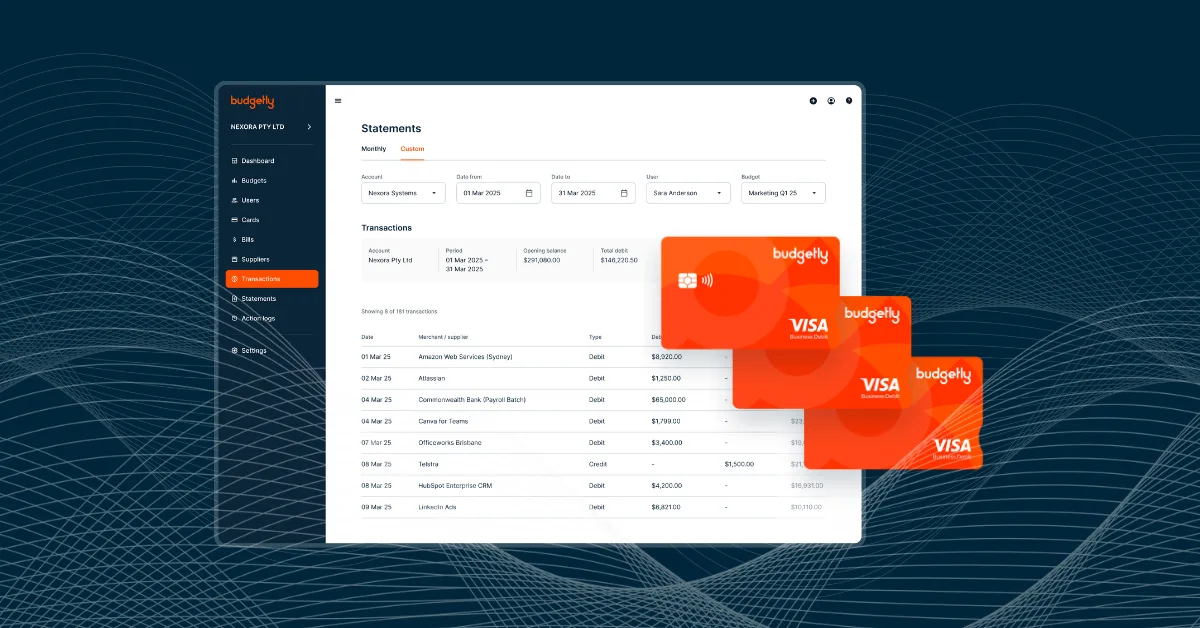
While choosing the right business bank account is crucial, having a smart financial management tool makes a big difference. Budgetly helps businesses take control of expenses by:
1. Real-time transaction tracking
Monitor expenses across multiple accounts in one place.
2. Digital receipt management
Easily upload and categorise receipts for simplified bookkeeping.
3. Spending controls
Set custom limits for team members to keep finances in check.
4. Automated expense reporting
Generate reports for better financial visibility and tax preparation.
5. Integration with business banking
Sync Budgetly with your business bank account for a complete financial overview.
These features help businesses stay organised and avoid financial mismanagement.
Final thoughts on choosing the best business bank account
Selecting the right business bank account depends on your company’s size, transaction needs, and financial goals. Understanding the types of accounts available, key features, and potential pitfalls can help make an informed choice.
Pairing a business bank account with an expense management tool like Budgetly ensures you maintain control over company finances, reduce unnecessary costs, and manage spending efficiently.