
Your bank balance is telling you what has already happened. Your budget is meant to tell you what is about to happen.
When those two numbers drift apart, it is rarely a bookkeeping issue. It is a timing issue. Cash only shows up in the bank once money leaves the account. But the decision to spend, and the risk to cash flow, usually happens earlier.
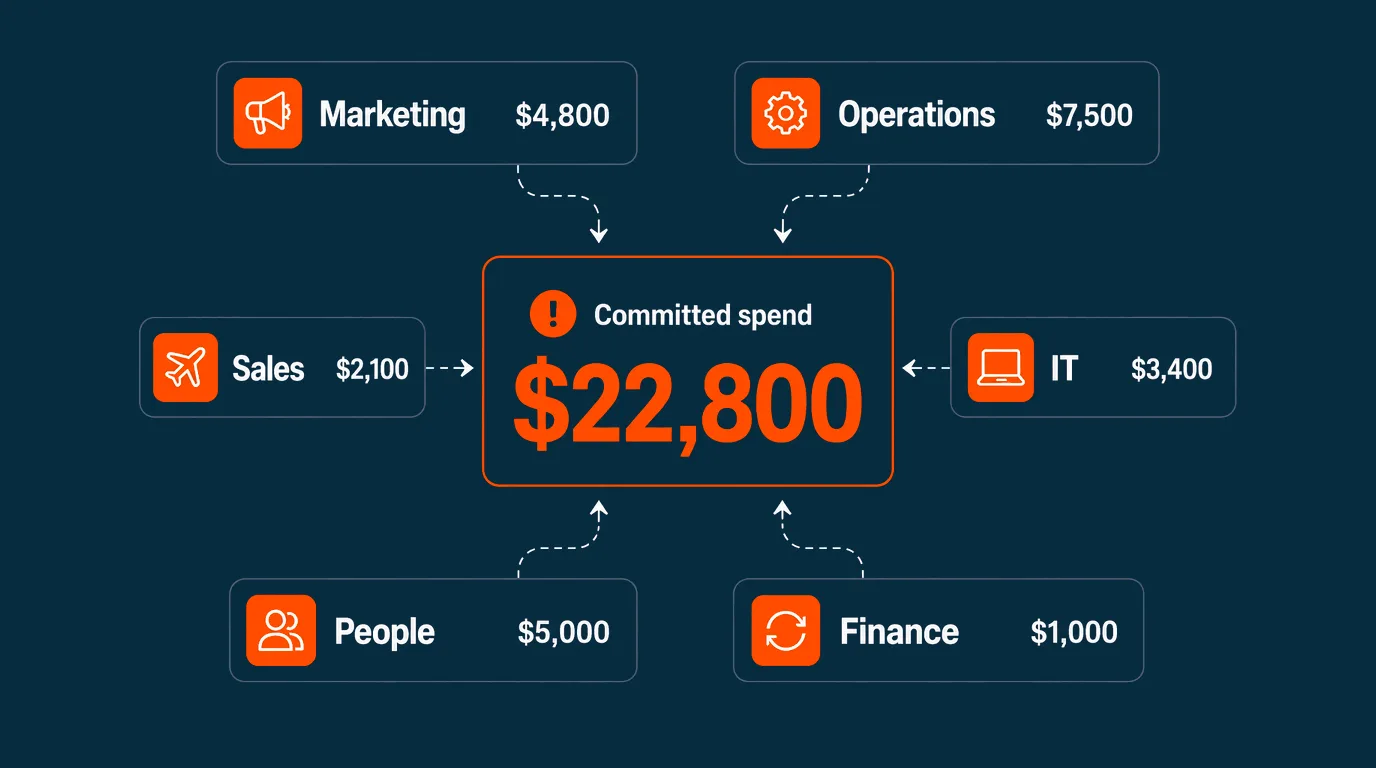
That gap is committed spend.
Committed spend is any cost the business has effectively approved, even if it has not hit the bank yet. Think purchase orders, approved bills sitting in an inbox, signed contractor agreements, travel bookings, subscriptions that will renew, or card transactions that are authorised but not yet settled. The decision is done. The outflow is just waiting.
If you manage the business using bank balance alone, you will keep getting surprised. Not because your team is reckless, but because your measurement point is late.
The two stories, side by side
Bank balance
- Shows actual cash out the door
- Updates after payment timing and settlement
- Can look calm right up until it is not
Budget
- Should show spend tracking versus plan
- Needs to reflect both actuals and commitments
- Lets you intervene before cash moves
A business can look healthy on the bank today and be in trouble next fortnight because the commitments are already locked in. The bank is a lagging indicator. It reports the outcome, not the decision.
Why the disconnect grows as the business grows
In a small business, the same few people approve most spend. They hold context in their heads. They know what invoices are coming. They know which renewals are due. They know that the contractor starts next week and the first invoice lands end of month.
As the business grows, spend decisions decentralise. Team leads approve costs. Tools get bought. Contractors start work. Travel is booked. Subscriptions renew quietly. Cards are used daily. The pipeline of commitments spreads across the organisation, and no single person has the full picture.
Finance then sees the impact only when cash leaves the account, or when the general ledger is reconciled after the fact. That is why budgets and bank balances start telling different stories.
Track three numbers, not one
If you want control without slowing the business down, track spend in three layers.
Actuals. What has been paid or settled. This is what your bank balance reflects.
Committed. What has been approved or is effectively inevitable, but not yet paid. This is where the risk sits.
Available. Budget minus actuals minus committed. This is the number that should guide the next decision.
The third number is the one that changes behaviour. It is what a budget owner should see before approving the next purchase. If they only see actuals, they can approve spend that looks safe today and becomes a problem tomorrow.
A simple example
A team has $20,000 left in its monthly budget. The bank balance looks fine. Actual spend so far is only $10,000. Everyone feels in control.
But there is also:
- $6,000 in approved invoices not yet paid
- $4,000 in card spend authorised but not yet settled
- $3,000 in subscriptions renewing this month
On a bank view, nothing looks wrong. On a commitment view, the team is already over budget, and cash pressure is already baked in. The decision has been made in multiple small steps. The bank just has not caught up yet.
That is the operational reason cash flow crunches feel sudden. They are not sudden. They are delayed.
What business leaders should do differently
First, stop using the bank as the main early warning system. It is accurate, but it is late.
Second, make committed spend visible alongside actuals. If you cannot see commitments, you are managing blind.
Third, push visibility to the people spending. Budget accountability cannot sit only with Finance. The team lead approving spend should be able to see “available” budget in real time, including commitments. Otherwise they are set up to make the wrong call for the right reason, which is speed.
Fourth, measure the gap. Track how often commitments cause budget blowouts, and how long it takes Finance to learn about major commitments. If that lag is weeks, you are not managing spend. You are recording it.
The bottom line
Relying on bank balance alone is like driving using the rear view mirror. It tells you where you have been, not what is coming.
Budgets only work when they include committed spend, because that is where the decision lives. When you can see commitments early, you can act early. You can pause non essential purchases, renegotiate timing, swap vendors, or move spend across periods before cash leaves the account.
That is how budgets and cash flow start telling the same story, and how you reduce surprises without adding layers of approvals or slowing the business down.